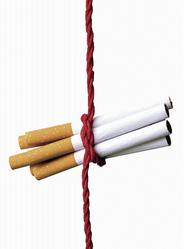
BE WELL - Kicking the habit
published:
Wednesday | May 28, 2008
Eulalee Thompson
LIFE IS just full of paradoxes, isn't it? Just think about it; many enjoyable and pleasurable activities are unfortunately not good for us, at least so the scientists say. I like, for example, a decadent chocolate mousse cake, but I can't eat it everyday; it might clog my arteries and make me fat. Obesity takes away three to six years from one's average life expectancy and, of course, leads to other chronic diseases, such as diabetes.
Smoking has never been my cup of tea, but some people picked up tobacco smoking during the vulnerable teen years, found it enjoyable and pleasurable at first, but now can't kick the habit because of addiction to the psychoactive agent, nicotine. By the way, smoking will cost you 13 to 15 years of average life expectancy. In fact, the World Health Organisation (WHO) states that tobacco use is the second cause of death globally and is currently responsible for killing one in 10 adults worldwide. It might not be a bad idea to start thinking about quitting.
Kicking the habit
Smoking cessation, kicking the habit, is a challenging process, but mental health experts say that these days you really don't have to feel alone; you can find support. There is support, for example, in counselling and medication to help you stop smoking. So you want to quit:
1) Start reading and educating yourself about smoking and its health risks. Focus on the fact that once you quit, you will breathe easier, become more energised with improved sense of taste and smell. You will also reduce your risk for various diseases, such as heart and lung diseases, strokes and cancer. You will also save some money.
2) Weigh the above pros against the cons of smoking.
3) Tell close family and friends that you want to stop smoking; enlist their support.
4) See your doctor and ask him or her about nicotine replacement therapy or medications that can support you in your effort to stop smoking. Some of them will help you manage your cravings for nicotine and the withdrawal symptoms.
5) There are some strategies that you can begin to employ, such as making smoking difficult and inconvenient (for example, smoke with the 'wrong' hand; purchase a brand you don't like); cut back; delay the time of your first cigarette and avoid people, places and things that tempt you to smoke.
6) Reward yourself for your successes.
7) It's challenging, but remember if you have done it before, it means that you can do it again.
The Bloomberg Global Initiative
Talking about quitting, the Heart Foundation of Jamaica (for The Jamaica Coalition for Tobacco Control) recently received a grant from the Bloomberg Global Initiative to implement picture-based no-smoking warnings on tobacco products sold in Jamaica and three other Caribbean countries - Barbados, Trinidad and Tobago and Guyana.
Dawn Williams, a communications officer with this new programme, said that the placing of picture-based warnings on cigarette packages is "simply the reinforcing of a treaty already signed and ratified by Caribbean countries". This treaty is the Framework Convention on Tobacco Control (FCTC).
The FCTC is a legally binding treaty negotiated by the 192 member states of the WHO. Key provisions in the treaty encourage countries to:
Enact comprehensive bans on tobacco advertising, promotion and sponsorship.
Obligate the placement of rotating health warnings on tobacco packaging that cover at least 30 per cent (but ideally 50 per cent or more) of the principal display areas and can include pictures or pictograms.
Ban the use of misleading and deceptive terms such as 'light' and 'mild'.
Protect citizens from exposure to tobacco smoke in workplaces, public transport and indoor public places.
Combat smuggling, including the placing of final destination markings on packs.
Increase tobacco taxes.
Williams said that in developed countries where the picture-based warnings have been implemented, there have been positive responses in terms of deterring those people who were thinking about starting to smoke and encouraging those who have already started, to stop.
She said that at the end of the two-year Bloomberg-funded project, rotating picture-based warnings will be placed on tobacco products in association with the Bureau of Standards and other local organisations.
eulalee.thompson@gleanerjm.com
The Bloomberg Global Initiative
Talking about quitting, the Heart Foundation ofJamaica (for The Jamaica Coalition for TobaccoControl) recently received a grant from theBloomberg Global Initiative to implement picture-based no-smoking warnings on tobacco products sold in Jamaica and three other Caribbean countries - Barbados, Trinidad and Tobago and Guyana.