AP Photos
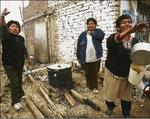
LEFT: Residents cook outside their house damaged by the earthquake.
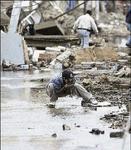
RIGHT: A resident drinks stagnant water in a street of Pisco, Peru on Friday where at least 510 people were killed and 1,500 were injured in the magnitude-8 earthquake on Peru's southern coast, overwhelming the few hospitals in the region.PISCO, Peru (AP):
President Alan García has called for the orderly distribution of emergency supplies as desperate victims of a magnitude-8 earthquake on Peru's southern coast looted markets and blocked arriving aid trucks.
The delivery of goods "must be gradual," García told reporters, adding he had ordered 200 navy officials to the area to maintain order.
But television images Friday showed hungry survivors leaving pharmacies and markets with bags full of food and other items. Some people ransacked a public market, while mobs looted a refrigerated trailer and blocked aid trucks.
Few buildings still stood in the fishing city of Pisco in the wake of a quake that struck Wednesday afternoon, killing at least 510 people. Many of the structures not reduced to rubble were rickety deathtraps waiting to fall.
Normality in 10 days
García predicted that "a situation approaching normality" would return in 10 days, but acknow-ledged that reconstruction would take far longer. He said authorities were considering nighttime curfews to maintain order on the streets, which still lack electricity.
The death count stood at 510, according to Peru's fire department, and hopes of finding more survivors have diminished. At least 1,500 people were injured, and García said at least 80,000 people had suffered the quake's impact through the loss of loved ones or destroyed or damaged homes.
On Friday afternoon, a Peruvian navy helicopter carrying food and medicine crash-landed on to the roof of a one-story building in Ica, near Pisco's main plaza, local media said. No injuries were reported.
The relief effort was finally getting organised. Police identified bodies and civil defense teams ferried in food. Housing officials assessed the need for new homes, and in several towns long lines formed under intense sun to collect water from soldiers.
In the capital of Lima, Peruvians donated tons of supplies as food, water, tents and blankets began arriving in the quake zone.
Peruvian soldiers also began distributing aluminum caskets, allowing the first funerals. In Pisco's cemetery, lined with collapsed tombs and tumbled crosses, a man painted the names of the dead on headstones - some 200 were lined up.
"My dear child, Gloria!" wailed Julia Siguis, her hands spread over two small coffins holding her cousin and niece. "Who am I going to call now? Who am I going to call?"
All day, people with no way to refrigerate corpses rushed coffins through the cemetery gate, which leaned dangerously until a bulldozer came to knock it down.
Amid the destruction, Canal N television reported that a woman identified as Ericka Gutiérrez gave birth to a son in a makeshift hospital in Pisco.
"Now everything is new for me," said the baby's father, Jesús Boquillaza, whose home was destroyed. "My son will give me the strength to go forward. I'm very happy because now I have a new life and someone to fight for."
More aftershocks jolted the region, frightening survivors, who fell to their knees in prayer, but doing little damage. At least 18 tremors of magnitude-5 or greater have struck since the initial quake.