Keisha Shakespeare, Staff Reporter
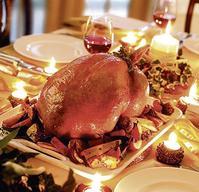
STUFF IT in a turkey or stuff it in chicken, either way it's finger-licking good. Stuffing comes in many forms. These days you can even get it pre-packaged in the grocery store, but it's much nicer if you make it from scratch. Stuffing is made according to personal preference, so if you like rice, bread crumbs or potatoes, you can use any of them to make a tasty stuffing.
Many may not know it, but in the Middle Ages, stuffing was known as farce, from the Latin farcire and French farcir which meant 'to stuff'. The word farce derives from Old French, meaning 'stuff' or 'stuffing' and may have originated in the comic interludes of medieval French
religious plays serving as light-hearted stuffing in between more serious drama.
The term 'stuffing' first appears in English print in 1538. After 1880, it seems the term 'stuffing' did not appeal to the propriety of the Victorian upper crust, who began referring to it as 'dressing'. Nowadays, the terms stuffing and dressing are used interchangeably, with stuffing being the term of preference in the south and east portions of the United States.
MADE WITH GREAT STUFF
WHEN MAKING stuffing, it is important that it is carefully prepared to avoid food poisoning. Because stuffing is moist and bacteria like warm moist carriers, it is best to make it separate. Serve as an accompaniment, unless the turkey or chicken is going to be served immediately after cooking.
Dr. Heather Little-White, food and nutrition consultant gives some generals rules for making stuffing:
Ideally, stuffing should be a mixture of contrasting textures examples, nuts, starch and raisins.
Vegetables tend to spring water , therefore, it should not be overcooked.
It is better to use a starch base for stuffing as it holds together other ingredients.
BREAD STUFFING
Dr. Little-White says it is better to use stale bread because it has a better texture and is easier to grate.
Bread can be cut into cubes and dried in the oven at a low temperature (275ºF), for about 15 minutes - making it crunchy and nice.
The same advice goes for making your own cornbread stuffing.
Bread end pieces are great to save for making stuffing. Don't limit yourself to plain white bread. All types of bread are suitable. Your only restriction is your own particular tastes.
If you are using old bread without drying it out, reduce the amount of liquid in the stuffing recipe or you'll end up with mush.
RICE STUFFING
Any variety of rice may be used for stuffing, but the herb or parboiled long-grain rice are better, as they have more loose grains.
Rice mixed with corn, carrots, and herbs or vegetables such as onion, garlic, celery, and mushrooms, can be lightly sautéed before adding to the mixture.
Stuffing should be prepared just before using, not in advance.
SWEET POTATO STUFFING
Sweet potato combined with nuts and raisins will add a sweet taste to the chicken or turkey meat.
Sweet potatoes should be cooked then crushed before using as a stuffing.
PUMPKIN STUFFING
If you're more health conscious then pumpkin is very good to make a delicious stuffing. Just add raisin and nuts and have a delectable stuffing.
It is important to note that pumpkin should be dry as it springs water that may cause the stuffing to break down after it is reheated in the oven.
Stuffing safety
Never overfill the bird's cavity because it will expand and ooze during baking
Never stuff your meat until you are ready to put it in the oven as it's a breeding ground for bacteria if left for even one hour before cooking.
Although you can purchase pre-stuffed foods at the grocery stores, commercial food manufacturers have access to preservatives that the housewife does not. Always use a cooking thermometer to determine if the food is done. Dressing is done when the internal temperature reaches 165º - 170ºF.
Stuffing storage
Be sure to remove the stuffing from leftover meat, poultry or seafood, and store it separately in the refrigerator.
Leftover stuffing will keep up to two days in the refrigerator and up to one month in the freezer.
Leftover stuffing can be fluffed, wrapped in foil (or placed in a baking dish), dotted with softened butter and reheated in the oven
15-20 minutes at 350ºF.
Sources: Dr. Heather Little-White, www.theathrelink.com, www.homecooking.about.com


















