
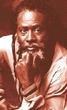
From left, Sean Paul, and Burning Spear
Teino Evans, Staff Reporter
REGGAE AND dancehall music have been making a mark on the international scene, raking in much support from various persons, artistes and media houses from around the world. But many of them are not aware that Jamaican artistes have long been making their presence felt on the international market and their work and talent have not gone unnoticed, so much so that many of them have been winners of the prestigious Grammy awards held in the United States of America each year.
At its inception, May 4, 1959, the Grammy awards included genres such as country and western and rhythm and blues. It has now expanded vastly to more than 30, and among the 'newbies' is reggae.
Jamaican artistes have been raking in the Reggae Grammy award since it was introduced in 1984, when Black Uhuru won with Anthem.
For 2002, Lee Scratch Perry won for Jamaican ET.
Damian 'Junior Gong' Marley won the 2001 Grammy for his Half-Way Tree album, which appeared on Motown Records. Damian, the youngest of the Marley sons, was not to be without a taste of the musical fame has. At 13 he formed his first band, the Shepherds, which also included the son of Third World's Cat Coore and the daughter of Freddie McGregor. The group even opened up the 1992 Reggae Sunsplash festival. By 1994 Damian was working on his own solo project, and with the help of his father's label, Tuff Gong, he recorded Mr. Marley.
In 2000, it was 'The Doctor' Beenie Man's turn to step up and collect the coveted award for his Art and Life album on Virgin. Born, Anthony Moses Davis, in Waterhouse, Kingston, Davis started deejaying at five. It was not until after winning the Teeny Talent show at eight years old that radio DJ Barry G introduced him to King Jammy's, Volcano and other sound systems, where he soon established himself.
Burning Spear had his taste of the Grammy's in 1999 for the album, Calling Rastafari (Heartbeat Records). Spear has been described as "a certifiable musical legend, whose career has already spanned over three decades and shows no sign of slowing down".
In 1998 Sly And Robbie (Sly Dunbar & Robbie Shakespeare) won for Friends (East West Records America/ EEG). The two met while playing at separate locations. Sly played at a club called Tit for Tat and Robbie just up the street at Evil People. They heard each other playing on their breaks and liked what they heard. It did not take very long for them to decide to form a drum-'n'-bass partnership.
It was time for Ziggy Marley And The Melody Makers in 1997, when Cedella Marley, Sharon Marley Prendergast, Stephen Marley & Ziggy Marley won a Grammy for Fallen is Babylon (Elektra/EEG). As Bob Marley's children, the band will always be associated with their father's towering presence, as both a musician and cultural icon and, according to a statement by Ziggy on the group's official website, "the Melody Makers are building upon the foundation I and I father started."
In 1996, Bunny Wailer saw his Hall Of Fame - A Tribute to Bob Marley's 50th Anniversary (Ras Records) win a Grammy for best reggae album. Born Neville O'Reilly Livingstone, the singer/songwriter was raised as Bob Marley's brother from the age of nine. Also co-founder of The Wailers (along with Peter Tosh), Bunny released his first solo project in 1976, the roots classic Blackheart Man, which included the classics Dreamland, Bide Up and Rastaman.
In 1995 Shaggy was known the world over as 'Mr. Boombastic' because of the enormous success of his album Boombastic (Virgin). Orville Richard Burrell, a.k.a Shaggy, was nicknamed after the character on 'Scooby Doo'. He moved to Flatbush, Brooklyn, when he was only 18 and there he began playing records and performing in New York's reggae scene. He cut his first of many singles,
Man A Mi Yard (released on Don One's Studio label) when he was 20.
Bunny Wailer, had one made for the history books, when he won his second Grammy Award in 1994 for Crucial! Roots Classics (Shanacie). He had claimed his first in 1990 for Time Will Tell - A Tribute to Bob Marley (Shanacie).
The only other Jamaican artiste/group to equal Bunny was Ziggy Marley and the Melody Makers, who won Grammies in 1988 for their Conscious Party (Virgin) album and for the second time in 1989 for One Bright Day (Virgin).
Shabba Ranks copped a double with As Raw as Ever (Epic) in 1991 and X-Tra Naked in 1992.
Other Reggae Grammy winners include Inner Circle (Lester Adderly, Carlton Coffie, Lancelot Hall, Bernard (Touter) Harvey, Ian Lewis & Roger Lewis), for Bad Boys (Big Beat/ Atlantic) in 1993; Peter Tosh in 1987 with No Nuclear War (EMI America); Steel Pulse in 1986, (David Hinds, Selwyn Bumbo Brown, Alphonso Martin, Steve Grizzley Nisbett, Alvin Ewen & Sidney Mills) for Babylon The Bandit (Elektra) and Jimmy Cliff, for his album Cliff Hanger (Columbia CBS) in 1985.