

A customer model that works - How EServices grew to 54,000-strong
Published: Sunday | April 26, 2009
Contributed
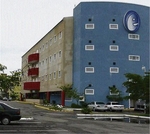
ACS-EServices call-centre operation at Naggo Head, Portmore, St Catherine. In nine years, the company has built a reputation on high-quality customer service.
Avia Collinder, Business Writer
THE ACS-EServices group has in the past decade built a company whose focus is on customer care, using a business model that has allowed the company to blossom into the largest private employer in Jamaica.
Jamaica is by no means a beacon on stellar customer service, but led by Patrick Casserly, ACS-EServices has proved itself an exception to that rule.
Its corps of 54,000 employees - 90 per cent or 48,600 of whom work in Jamaica, with the rest in St Lucia- operate under a model customised to the needs of ACS-EService's client base, which includes 22 Fortune 500 companies and five local outfits.
"We have been very successful; we have never had a shrinking year," says Jonathan Hummel, vice-president of employee development at ACS-EServices. "Obviously, our customers are pleased with the work we do."
The company, which began as EServices under the ownership of four Jamaicans, last month sold controlling interest to America's ACS for US$85 million.
How far EServices has come is best demonstrated by where it began. On April 5, 2000, the company launched into business in Montego Bay with 35 workers who did back-office processing for the call centre's sole client, who remains with EServices.
The company is headquartered in Montego Bay, but also has call centres deployed across Kingston and St Catherine.
Casserly, a principal shareholder and CEO, puts recruits through rigorous training - where staff is required to dissect their own personality types as well as that of clients - before they deal with customers of client firms.
"Our service model is customised based on type of business," says Tracy-Ann Davis, ACS-EServices account manager.
"If it is a health-related account or electronics, this element is incorporated to ensure maximum benefit to agent and client."
Interpreting customers' needs
Ezekiel Foster, 31, agent at the ACS-EServices centre in Portmore, St Catherine, who, in 2008, received a departmental award for top agent, says that providing world-class customer service often involves interpreting what customers need.
"Sometimes they themselves do not know. You have to decipher what they need."
This type of work, he says, is easy for him, having worked previously in marketing and sales, including as a trainer to marketers.
Before going to ACS-EServices, he was a senior account adviser with another call centre, MTI, which, in 2008, relocated to Trinidad.
Foster says he has seen the rewards of his hard work at EServices. The job, he says, gives him satisfaction, though he does plan to launch out into his own venture.
"For me, I love to deal with persons. It's a great feeling when you have provided information and they say thanks. Some are really irate, but you itemise the elements of their bill and they understand and they come right down. That's a great feeling. I will be staying in customer service."
On the job, each ACS-EServices staff member's performance is assessed on how well he or she handles customer queries.
Satisfied clients
Satisfied clients, apparently, are key to a fat pay packet - right up the ladder.
"They affect 60 per cent of what our workers take home. This is carried up through the ranks - from production to supervisors and managers," said Hummel.
"We audit the work of our workers for accuracy of information, connection, content, customer service and problem solving or resolution. Audits are done by us, and clients as well, and the combined result affects the compensation that staff receives."
ACS-Eservice's integrated model of response to client service is based on the psychological profiling of workers as well as callers.
"We have developed techniques to show people how to connect with the different types of customers that we service. We don't just go through customer-service techniques, but also communication skill building," he said.
"We dissect communication into its components, looking at all the dysfunctional types, as well as the desired. We also expand on personality style, trying to get people to understand that some people will only communicate in certain ways based on who they are and their personality type."
Indeed, staff are required to 'switch' personalities to connect or build rapport with the customers they are dealing with at particular points in time.
"Our workers must also understand their own personality, so that they have to be able to shift their preferred personality style because the customer will never do that," said Hummel.
His colleague, Judith Leslie-Edmondson, human resource manager, said so successful has the training been that, in Montego Bay, workers have started a cultural movement involving the demand for better services anywhere they go in the city.
Objective
Added account manager Davis: "They see themselves as a part of the process instead of just as workers being graded. The objective is to ensure that everyone does better."
Hummel notes that where performance is linked to pay it is also accompanied by "an excellent coaching programme", as well as transparent systems of measurement so that staff feel they are reliable.
One of Jamaica's largest companies, Sagicor Life Jamaica, has been studying the EServices model as it goes through a restructuring of its own system, with the intention of implementing a 'pay for performance' salary scheme. That plan has met up on resistance.
But at ACS, Hummel claims, staff are very responsive.
"Many strive to do the best they can and some get top marks week after week, although others fluctuate. But they understand they need to excel to get maximum pay and provide maximum satisfaction for clients," the vice-president said.
Davis notes that the system in place invigorates staff.
"Staff are highly competitive. Each week, they challenge them-selves, sometimes even beyond the incentive programme. They compete with other teams," she said.
"I think it is something about being Jamaican."
avia.ustanny@gleanerjm.com