
Public radio: setting new standards for decadence?
Published: Sunday | March 22, 2009
File
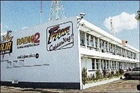
The corporate headquarters of Radio Jamaica, Lyndhurst Road, Kingston - one of Jamaica's leading broadcasting entities.
Hume N. Johnson, Contributor
Now that the rampin' shops have been locked down, perhaps we can begin a focus on the quality of public radio in Jamaica and overall media responsibility. These are genuine issues which I believe were either inadvertently overshadowed or purposefully ignored in the recent stampede to defend the decadence of dancehall and 'bun a fire' on the Broadcast Commission and the Government for taking a zero-tolerance stance on incivility and indecency.
Of course, once again, when such stances have been taken, notions of censorship, of freedom of speech, the free press and even social oppression (within the context of the vast inequities between the social classes in Jamaica) are wantonly banded about and blatantly deployed to stymie and corrode genuine discussions about media practice. I won't get into the substantive debate on all of the above, but will focus here on what I believe to be the indispensability for rigorous media regulation in Jamaica and, in this sense, quality public radio, particularly in a context of under-development, poor education, decaying values, and negative social capital.
Requires constant oversight
The liberal tradition is, of course, fiercely supportive of freedom of speech, including a free press, totally unimpeded by state intervention. Bentham and Mills argued for a free press on the basis that the political system required constant and vigorous oversight. For these noted philosophers, a free press was essential as it could publicise government excesses and misconduct. In his thesis on the subject, however, John Milton (1644) argued that, in practical terms, the controls placed on the press by the state were unworkable and unenforceable, and might give rise to arbitrary decisions. Milton claimed, among other things, that humans were blessed with rationality and, hence, retained the capacity to choose between right and wrong by engaging contrary opinions and experiences (See Keane, 1991).As facilitators of the public sphere, the media then not only performs a function as a watchdog on government and information-provider but allows us to engage in dialogue about ideas, government, our fellow citizens and about the world. Censorship, in this sense, would cause ideas to stagnate, and, by extension, society.
Private ownership preferred
If one were to take this argument to its logical conclusion, then one might agree that private ownership of the media would be preferred over government ownership, if only to maintain that critical distance between media and government. Those who cry censorship each time the Jamaican government takes a decision with regard to media content and broadcasting standards would perhaps deploy willy-nilly Milton's notion to prop up their argument in the Rampin' Shop debate. Most liberal societies have some variations of a 'lightly-regulated' media. Lightly-regulated media are subject only to libel and decency laws and the tenets of good taste and decency'(see Wheeler, 1997, p. 6). In other words, the suggestion is that the level of official media regulation should be minimal, activated only to prevent unscrupulous business practices and maintain general standards of public decency.
Yet, it is precisely at this juncture in Jamaica - where there is an overwhelming and manifest necessity to safeguard or re-establish general levels of decency and civility within the public sphere - that some members of the Jamaican citizenry squeal to the Government about 'censorship' and 'rights'. A view might now be formed that even sensible Jamaicans cannot, within reason, see and/or support the necessity for even a 'light-regulated media'. The vociferous and violent opposition by significant pockets of the Jamaican citizenry to the Broadcasting Commission's stance against selected dancehall songs aired on public radio would seem to suggest that there ought not to be any regulation at all of media in Jamaica. This speaks volumes not only about freedom and rights but also about the kinds of values that Jamaican citizens apparently wish to embed and celebrate. But that is a different discussion for another time.
Who is to regulate the media?
For many commentators, the Broadcasting Commission is a needless, redundant organisation, creating more harm than good. But ask this question: If the media are to regulate government, then who is to regulate the media? Can Jamaican media self-regulate? Shall we put misplaced trust in the virtues of the market to regulate the sector?
These are not rhetorical questions. There will always be situations in which government intervention in the activities of the media is deemed necessary, even beneficial. I identify three here, as per liberal theory: First, in the interest of protecting people's reputation, physical safety and assets, most liberals agree that restrictions on what the media can show or say is appropriate. Second, limitations on the media ought to be permitted in the interests of national security, a clause which is essentially self-explanatory. Third, and most significant to the current debate, restrictions should exist on speech or material that is violent or pornographic or that incites violence. Such material is deemed to be unhelpful to the community and therefore should be prohibited.
Liberal democratic governments such as Jamaica's often find themselves in a delicate position of attempting to protect the rights of the individual with those of the broader community. It is my belief that in circumstances where manifestly violent and or sexually explicit content is broadcast, as was the recent case in Jamaica with dancehall songs such Rampin' Shop and "daggering", the Government agency responsible for media regulation has an obligation to intervene. Indeed, matters of censorship and media ownership also create heated public debate in highly democratic, liberal democracies such as Australia and New Zealand. Bear in mind, however, that these societies are organised by, and categorically rest upon agreed principles of civility, respect, and public decency. Even a cursory perusal of Australasia's broadcasting regulations would suggest that broadcast which breach the above principles are recognised as not serving the community and hence problematic.
In the absence of a media regulator, can Jamaican media then regulate themselves? I believe the Jamaican media can, if they want. Indeed, there was a time when there was an attempt, vis-a-vis the existence of programme departments/programme managers, when on-air content was subject to a filter system. This allowed for problematic or controversial material to be veted, and, in effect, 'garbage' disposed of.
Today, the regulatory systems within broadcasting houses are much more relaxed and individual announcers appear to have much more independence in the selection and airing of media content. It might be argued then that the media have not been as reliable as they perhaps ought to be in regulating themselves.
Can the free market then, by its very nature, offer a regulatory mechanism for media? The growing commercialisation of the media means that the rush for ratings and securing the bottom line (profit) trumps concerns about social order/disorder. At various intervals, however, when their public image has taken a beating, and their financial backs are pressed hard against the wall from public backlash, corporate companies in Jamaica have taken a stance against artistes with lewd lyrics, and events which promote violence and incivility.
Natural reluctance
There is yet to be a case where a Jamaican advertiser pulls ads from a broadcaster which insists on relaxing the boundaries of public decency and good taste. Since much media content nowadays is geared towards 'infotainment', and it is this aspect of media content which most attracts listeners/viewers and advertisers, there is often a natural reluctance for advertisers/ sponsors to intervene in the media content/media regulatory debate. In other words, the links between private, commercially-run broadcast entities and the liberal selection, quality and choice of media content is increasingly apparent. This means that the so-called virtues of the marketplace are, in reality, unable to provide the inbuilt regulatory mechanism some commentators expect. In short, the perils of a market-driven Jamaican media sector are there for all to see.
Can we appeal then to media practitioners' sense of civic responsibility, and other voluntary mechanisms, as the best means of curtailing the activities and behaviours of the media? Given the sheer ubiquitousness of the broadcast media in Jamaica - in terms of immediacy and mass coverage, and the embeddedness of the market - this means that it is unwise to leave them to their own devices. The Government, through its regulatory agencies, is thus obliged to ensure, inter alia, that consumers are not subject to offensive material and content. Indeed, I am of the view that information which threatens or undermines the civil community must not be allowed to be transmitted on public radio.
No longer 'virtuous'
I conclude by asking this question: If the media are not adequately serving the society in which they operate, do they have a legitimate claim to the extensive freedom that they demand? It is becoming increasingly apparent that the Jamaican media can no longer be seen as a 'virtuous' civic institution working for the common good and helping to create a decent, orderly society and positive social capital. The attributes of a civil society encompasses a certain degree of cohesion and trust among citizens, active interest and participation in public affairs, vis-a-vis, the media as well as citizens who are law-abiding, respectful and tolerant - in short civil.
Given the media's unique position in relation to citizens, its institutions cannot be merely detached bystanders but central actors in the constitution of a civil society.
Dr Hume Johnson is a broadcast journalist and political scientist. She currently teaches journalism and communications at James Cook University, Queensland, Australia. Email: humepela@gmail.com.