
The souls of black folk
Published: Tuesday | January 13, 2009
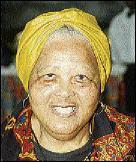
Bennett-Coverley
The Editor, Sir:
Last year was a good one for black people, my son opined.
It was the year when Barack Obama won the United States presidential election and, to my son's credit, he had been following Obama's campaign long before he even won the democratic candidacy.
Then, there was Lewis Hamilton's winning the Formula One title. All of these are considerable 'firsts' for black people.
In the United Kingdom, Tory leader David Cameron reflected on how far Americans have come in 40 years since the civil rights campaign, completely missing the point that black people have been America en masse for over 200 years.
That it has taken America that long to be 'ready' for its first black president, and Cameron thinks this is progress a plenty, does not augur well for a similar occurrence in England anytime soon.
BENNETT-coverley and SHAKESPEARE
Lest we think that backward, mono-cultural, racially elitist views are part of a distant past, the mayor of London, less than a month before Christmas, expressed the view that the capital's children should be weaned off hip hop and movies and exposed to Shakespeare.
Now, as someone who loves literature, from Louise Bennett-Coverley to Shakespeare, I have no problem with exposing children to one of the great writers of world literature.
I do have problems, however, with a mono-cultural view that seems to think that there is nothing of merit in contemporary music or movies and that artistic merit lies solely in Shakespeare and similar white icons.
This appears a mutation of formerly articulated views about the non-existence of black artistic expression.
In Jamaica, our assertion of our own cultural identity has involved the work of our best researchers, poets, writers and painters.
We celebrate literature that, from to Bennett to Brodber, charts our rise as a nation and gives a people who, for generations, were denied a voice words to speak.
As America, that 'great' bastion of democracy, has only just declared itself ready to accept a black man as head of state, it will be interesting to see, in the coming year and the rest of the 21st century, how much that problem recedes into an improbable past or, like the latter-day neo-conservatives, find ways of mutating and reinventing itself.
I am, etc.,
HUGH STULTZ
London, England