Paul H Williams, Sunday Gleaner Writer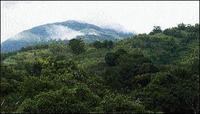
Clouds caressing the slopes of the east peak of the Blue Mountains.- photos by Paul Williams
MT LEBANUS, St Thomas, is a cool, quiet community nestled between the Wild Cane and Negro rivers, flowing from the hills of the Blue Mountains. It is a far departure from the hot and humid conditions of city life. And, like the 'idolent' negro in the days of slavery, you get the feeling that you want to 'lie under a pumpkin tree eating a ripe pumpkin' all day.
The green and blue hills, cloaked by white clouds, in the distance, look like a fairy wonderland from below. The cool mountain breeze caresses your cheeks, while the tempting waters of the river rush by. Yet, for people who are living on the edge of the temperamental Negro River, in Mount Lebanus, time is running out. For others, it already has.
river's might
The river runs all the way to Morant Bay; and as it travels along, it shows its might, not respecting man, woman or child. Not even the graveyard has been spared, as at one point, bodies had to be exhumed, lest they were washed away.
At Mt Lebanus, the river used to be deep and narrow, with houses built a few feet away. However, deforestation and subsequent soil erosion in the hills resulted in earth and boulders being washed down into the river.
Over time, it became shallower and wider, undermining the lands on which houses were built. Since Hurricane Ivan in 2004, many houses, farms and backyards have been washed away. Still, the Negro is not relenting.
Like the duppies that once roamed the communities, hurling stones and lampshades, according to folklore, the river is restless and mysterious. It cannot be tamed. For those who are still enjoying its lullaby, it is only a matter of time until they will have to bid the Negro River goodbye.
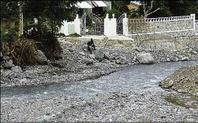
There once was a road in front of this residence located beside the Negro River, but now the river runs along the retaining walls.
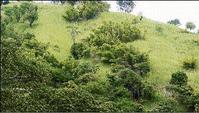
The verdant vegetation of the Blue Mountains, overlooking the community of Mt Lebanus.
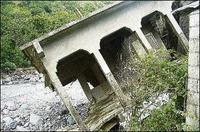
Continuous erosion of the banks of the Negro River has led to the destruction of houses such as these in Mt Lebanus, St Thomas.
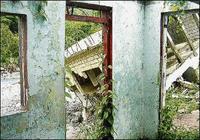
A victim of the angry Negro River in Mt Lebanus.
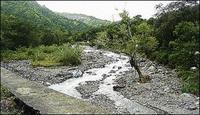
The Negro River valley has grown wider and wider over the years, causing the destruction of homes and properties located on its banks. In the distance are denuded hillsides from which come much earth and many rocks.