Janet Silvera, Senior Gleaner Writer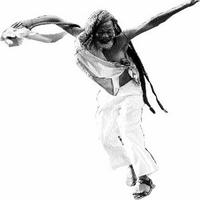
Prince Tebah, of the drumming group Prince Tebah and the Sons of Negus, leaps into the air during a performance at the site for the Rastafarian Indigenous Village at Montego River Gardens, St James, recently.
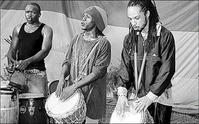
Children of the Drums are expected to be regular performers at the Rasta Indigenous Village, Montego Gardens, in St James.
WESTERN BUREAU:
The lifestyle of the group that venerates Ethiopia's Haile Selassie is to be showcased as Montego Bay is to become the birthplace of the culturally inspiring Rastafarian Indigenous Village, come December.
Designed to offer an insight into the aspects of the culture, philosophy and spirituality of the Rastas of Jamaica, the village will be situated on the lush Montego River Gardens property, approximately 15 minutes from the town centre.
"The village is defined as indigenous because this cultural form is home grown and native to Jamaica and has achieved international recognition because of the meanings and lifestyle defined by the followers in Jamaica," explained Edward Wray, one of three owners of the village.
His partners, Arlene McKenzie and Mark Beckford, believe it is this interest that will allow the village to offer an understanding to visitors to the island in search of this legacy.
message
Achieved years ago through the country's music and the message of the late king of reggae, Robert Nesta Marley, the rich legacy is embodied in the village.
"We continue to attract an inter-national following of people seeking authentic knowledge and experience," Wray said.
Visitors to the village will be exposed to a lifestyle of wellness, complemented by the Rastafarians' ability to live within the realm of modern society.
Wray and his team are embarking on this historic project due to Jamaica's achievements by its people, music, art, sports and language which serve as natural selling points.
"Yet the visitor, particularly the short-stay visitor, on arrival here, is very rarely given an opportunity to sit and interact on these topics with the local people, in the natural environment, away from the backdrop of tourism," Wray said.
unique experience
In response to this need, the village will give the visitor a feeling of being in a community that is ideally different and uniquely special.
"The village will give them a memorable and unique experience," he insists.
The team says that as a pivotal part of their lifestyle, all the people in the village are required to possess professional attributes, such as punctuality, dependability and commitment. And, all will be trained in various disciplines. Craft producers must be persons capable of sharing their knowledge with the visitor; healers must possess a solid background and knowledge of healing herbs and food preparation; musicians will be authentic, producing chants and lyrics that are approved by the Rastafari community and easily communicated to the visitor.
Significant emphasis will be placed on the ongoing training of all management, staff members and stakeholders.
authentic materials
"Only the most indigenous and authentic materials and techniques will be used," stressed Wray, adding that visitors can expect the services, products and information offered to have documentation behind any claims made.
The Rasta Indigenous Village will also carry a unique home-grown line of products - fashion, adornment, publications, aromatherapy, herbal goods and items promoting healthy living.
Two of the principals are Rastafarians who have worked in the tourism industry. Having recognised the growing interest in the indigenous products of Jamaica, Arlene McKenzie said: "The impact of Rastafari has helped to project the impact of Jamaica's culture on the people of the world and so the village intends to create a microcosm in which to encapsulate many aspects related to living a wholesome life."
clean air
The former Tourism Product Development Company, manager described the proposed setting as one that will allow visitors to experience the ideal backdrop of the elements of nature, earth, clean air, water and enough activities to positively engage all the senses.
The Rastafarians plan to give a sneak preview of their village at the upcoming WATA Rose Hall Triathlon and Wellness Festival to be held at the Cinnamon Hill Golf Course in Montego Bay, October 23-26.
"It will be a mini-village, and they plan to have 'Mama G' and the 'Ancient One' imparting their knowledge of herbal remedies by using our local herbs," said Katherine Marley, coordinator of the wellness festival.
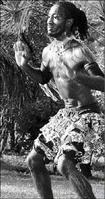
A member of the group 'Children of the Drums' performs at a brunch at the proposed site of the Rastafarian Indigenous Village, Montego River Gardens, in St James, recently. - Photos by Janet Silvera