Marcia Rowe, Gleaner Writer
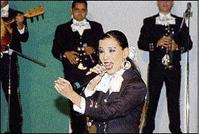 Singing was integral to the programme.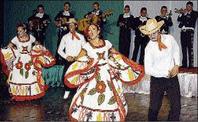
The dances were a colourful display of costumes and movement.
"The Mexican culture is vibrant and energetic." This was demonstrated on Tuesday, September 16, at The Courtleigh Auditorium, New Kingston.
This taste of Mexican culture came in the form of a programme entitled 'Achai: Folkloric Dance and Mariachi'. Mariachi means street singers and, according to the programme note, achai means older brother in Yaqui language.
But the energetic group of 19 persons, who performed on the heels of Mexico's 198th independence anniversary comprised two female and nine male mariachi and four female and four male dancers. Most of the members of the group are college and high-school students between 16 and 25 years old "with very diverse backgrounds".
Their performance, however, belied their youth, as the mariachi displayed great vocal skills and talent, using their instruments to speak in a language that was understood by the large audience.
Fiesta
Adorned in black tops and bottoms decorated with silver studs along the sides of their pants and skirts - the black tops also decorated with silver studs and silver buttons and large white bow ties - the mariachi gave energetic performances with songs such as Principio, Fiesta en Jalisco, Aires del Mayab and Feria de San Marcos.
But the best mariachi performances were by lead singer Karla Guadalupe Parra's singing Cucrrucucu and Parra and Emmanuel Jatomea, the other lead singer in the group, giving a wonderful rendition of El Destino.
The dances were a colourful display of costumes and movement. Performing dances from all four corners of Mexico, the group captivated the audience with movements from Sinalos (from the north), Yucatan (south) Veracruz (west) and Nayarit (east).
constant change
The dominant dance movements were tap dancing, but the beauty of the dances was the constant change in formation from diagonal to square and horizontal lines.
In Nayarit, a two-part dance, El Limoncito and Los Machetes, the audience witnessed a skilful exhibition of the use of knives by the male dancers. With each dancer carrying two knives, they captivated the audience with fancy movements, while exploring different levels. Were the knives real? By the clanging sounds, you bet they were.
Throughout all the dances, the performers make high-pitched clicking sounds, thus creating a sort of call and response, which generated some excitement in the performances.
swirls
Undoubtedly, the costumes were spectacular. The skirts for the females were extremely wide and constantly used to create swirls, which seems to be the prevailing movement in all the Mexican folk dances regardless of where they originate. The colours varied from red, blue, green and yellow to a delicate white fabric. Scarves, mainly red, were worn by both males and females.
The costumes for the men were complemented with hats, including the Mexican sombrero.
The set was simple and practical, forming the backdrop was a large Mexican flag and right at the bottom of the flag, along the up-stage areas, was a ramp also draped in the colours of the flag. Standing proudly down-stage left and right were the Jamaican and Mexican flags.
'Achaia: Folkloric Dance and Mariachi' was a wonderful family programme and seemed to be enjoyed by all in attendance. Viva Mexico!
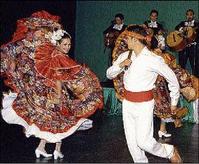
The costumes were spectacular. The skirts for the females were extremely wide and constantly used to create swirls during the 'Achai Folkloric Dance and Mariachi' presentation.- Peta-Gaye Clachar/Staff Photographer
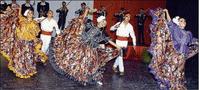
The beauty of the dances was the constant change in formation, from diagonal to square and horizontal lines.