Avia Collinder, Gleaner Writer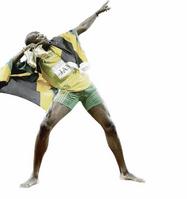
Olympic 100- and 200-metre record holder, Usain Bolt.
Gilded by their world-beating performances at the Olympics, Jamaica's top athletes can now earn millions in prize money, appearance fees and endorsement deals.
But for the Jamaican track stars, as it has long been for other elite athletes with a short career lifespan, the question is: If they rake in the cash now, how much will they have at retirement? The answer, say the experts, depends on how they spend now and how well they invest.
"From my experience, the biggest mistake that an athlete can make in the early stages of their career is to spoil themselves with luxury items, like cars and gadgets, in the belief that the money will keep coming in," says Ricky Simms, the London-based manager of Olympic triple-gold-medallist, Usain Bolt.
But as Norman Peart, Bolt's Jamaican manager, pointed out, it only takes an injury to wipe out an athlete's career, or a couple of bad seasons to bring to a trickle, if not completely shut off, the financial spigots.
So, says Peart, athletes need to put aside as much as they can for the future "when they may not be earning".
It is the message that finds resonance with financial advisers, many of whom, according to the lore in Kingston, are trying to get invites to any party where Bolt is to be found.
And not without good reason.
Bolt is the top earner in Simm's Pace Sports Management, which has a stable of about 85 international athletes.
In Beijing, Bolt won gold medals in the 100m, 200m and 4x100m relay - all with world record times. For his efforts he received a reported £500,000 (US$$1,000,000) bonus payment from German shoe com-pany PUMA, with which he has an endorsement contract, as well as a brand-new BMW M3 motor car. In Jamaica, such a vehicle would retail for more than $10 million.
Other Jamaican athletes, including Olympic 100-metre winner Shelly-Ann Fraser and women's 200-metre gold medallist Veronica Campbell-Brown, also have endorsement agreements with the shoe company.
But it is not only through such deals that athletes can earn sizeable sums. The elites among them can collect sizeable appearance fees from venues and meets, including six Golden League Meets and nine Grand Prix meets. In addition, there are also eight Super Grand Prix meets as well as 11 Grand Prix II meets.
An athlete who appears in each of the 34 meets, earning US$100,000 for each, could gross US$3.4 million (J$204 million) in a season. There is also a US$1 million bonus for the winner of each event at all six Golden League meets, potentially bringing that figure to US$4.4 million (J$264 million).
There is also money to be earned for breaking records. Following the Olympics, European track-meet organisers were polishing the gold bars in anticipation of new records. At the Weltklasse meet in Zurich, organisers were promising a kilogram (2.2 pounds) of gold and prize money worth a combined US$93,000 if Bolt broke his 100-metre world record of 9.69 seconds.
At the Athletissima meet in Lausanne, another gold bar worth around US$27,000 was on offer if Bolt improved on his newly minted 19.30 mark in the 200 metres.
Weltklasse was also offering a US$50,000 record bonus on top of US$16,000 for winning a race.
Commentators have noted that some of those on the international circuit who earn at this level waste their income, some spending lavishly on fast cars, gaming, clothes, parties, and other luxuries.
management by government
In Thailand, for example, the government seeks to prevent this by paying their athletes in instalments to stop them from squandering their money. In that country, gold medallists earn 10 million baht (J$314,000), silver-medal winners will take six million baht. Half of the money will be paid over a 20-year period to prevent Thai Olympians, many of whom are from poor backgrounds, from frittering it away, according to a Reuters report in May.
In Jamaica, there is no such scheme and athletes are obliged to teach themselves money management or get professional help to take them through the maze of finance and investment.
Peart, Bolt's Jamaica manager, is aware of the potential distractions that can accompany fame and fortune, not least of which are the hangers-on who appear as if from nowhere.
"People will become your friends overnight, so be careful," he advises such new stars.
"And yes, we know you love your parents and your friends, but be wary of their demands. Make sure you have near to you someone you can trust and talk to them at all times about your decisions."
Dwight Newman, senior vice-president for markets and trading at the Jamaican brokerage, Mayberry Investments, says that people with such pumped-up earning power should not be lulled into a false sense of security that this income stream would exist indefinitely.
"We like to see athletes set themselves up for the future as their first priority," Newman says. "In my 10 years experience as an investment manager, I have seen persons spend windfalls on nice-to-haves, such as expensive vacations."
financial foundation
Another error, says Newman, "is not securing your financial foundation before giving away money to 'the needy'".
Peart has some good, old-fashion, but sound advice for athletes who now find themselves in the money.
Says he: "They should plan for the short, medium and long term. Get information on money management and get advice from those who know what they are doing. Study your options. Don't be extravagant in spending. Make a budget, stick to it and be wary of friends and their demands or invitations to party excessively."

Former 100-metre record holder, Asafa Powell. - file photos
avia.collinder@gleanerjm.com