Gareth Manning, Sunday Gleaner Writer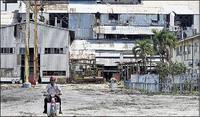
Bernard Lodge sugar factory in a deplorable condition. After September 2008, the factory will primarly produce ethanol instead of sugar. - Kyle Macpherson/Freelance Photographer
INFINITY BIO-ENERGY, the Brazilian company to which the Government is divesting the assets of the Sugar Company of Jamaica (SCJ), is expected to inject in the region of US$200 million (J$14.4 billion) to retool the poorly maintained factories, The Sunday Gleaner has learnt.
Chairman of the SCJ, Robert Levy, says the money is to be spent over a period of five years to bring the factories back to viability. The five sugar factories owned by the SCJ, which include Monymusk in Clarendon, Bernard Lodge in St Catherine, and Frome in Westmore-land, have been in serious disrepair for the last 15 years, due to poorly maintained equipment and antiquated harvesting mechanisms.
"It (the sugar company) is at a point that Government would never have the money to put it back into shape," Levy says. The SCJ has debts of more than $18 billion.
no equipment upgrade
Several of the factories have not had their equipment upgraded for decades. The Sunday Gleaner last week toured the dilapidated Bernard Lodge factory, a facility which, decades ago, was efficiently churning out tons of sugar cane. Some of the operating equipment has been there since the 1960s and frequently breaks down because of age.
The roof was destroyed by Hurricane Dean last year, and only half the repairs have been done. When it rains even slightly, production has to be stopped, say company representatives.
"We need major capital investment," says estate manager, Glenroy Miller.
Bernard Lodge has the capacity to mill 3,000 tonnes of cane per day, Miller points out, but is only managing about 1,500 tonnes due to the technological incapacity of the factory in both processing and harvesting operations.
The factory is currently operating with less than 50 per cent of its cane cutters and has four harvesters, which need continuous repairs. Two harvesters are currently down. The situation sometimes forces the company to borrow from other estates.
All other state-owned factories are facing similar problems. The St Thomas Sugar Company is 68 per cent efficient. While it managed to increase its sugar output last year from 11,000 tonnes to 14,000, the company needs a major overhaul to enable it to mill 2,200 tonnes per day.
"We need a major retooling, and if we get that, we should be on a viable path," senior engineer at the factory, Uriel Smith, says.
divestment
Government agreed to divest its assets in the SCJ to Infinity Bio- Energy in late June last year. It will not receive cash for the sale, but a 25 per cent stake of the assets for three years, valued at US$25 million or about J$1.8 billion. The assets will be fully transferred by September 30.
Under the agreement, Infinity Bio-Energy's core focus will be on ethanol production and will produce 80 million kilolitres of ethanol within two years, and 135 million by 2013. It will simultaneously improve sugar-cane production to 1.4 million tonnes in 2009, to 2.5 million by 2013.
Their operation will also include a 138 gigawatt co-generation project by 2011. This will increase to 168 gigawatts of electricity by 2013.
Infinity's operation will, however, see a decrease in sugar output, from 125,693 tonnes in 2009, to 62,000 tonnes in 2010.
second attempt
The Infinity divestment is the second attempt by the Jamaican Government to divest the SCJ and its assets.
The former PNP administration, led by P.J. Patterson in the 1990s, divested the company to a consortium of local entities and a British company, Booker Tate.
That deal fell apart, however, after a few years when the purchasers said the Government had failed to meet its commitments under the agreement and that its economic policies and actions to allow the revaluation of the Jamaican dollar made the business unprofitable.
gareth.manning@gleanerjm.com
Infinity fact file
Infinity Bio-Energy, which is a partnership between Brazilian and US investment firms, is registered in Bermuda.
The company has been aggressively acquiring sugar plantations and ethanol factories in Brazil.
It recently made an acquisition in the Dominican Republic.
The Jamaica acquisition is its first investment in the English-speaking Caribbean.