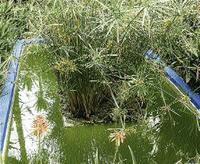
Papyrus really is an invasive plant. To contain it, the best thing is to install it in a sturdy pot and sink the whole thing in a pond! - Photo by Rita Elliott Papyrus is one of the most important plants in the history of early civilisation,
Beginning as early as 4,000 BC, papyrus was the plant used to produce sheets of paper for thousands of years.
In fact, a thriving and vital trade existed for this writing material until about the third century AD, when it was discovered that it was easier to produce paper from plant pulp. This process was introduced to the West by China, via Arab traders.
Papyrus was, however, much more than an everyday paper product. Ancient Egyptians would also use the soft pith of the stem as a foodstuff, cooked and processed like sugar cane, or eaten raw. Ancient pharmacologists, like Galen and Dioscorides, catalogued a wide variety of medicinal uses for infusions made from the plant.
various uses
Egyptians also harvested and dried the woody rhizomes to use as a fuel - whose ashes were also medicinal! Garlands were woven from the graceful flower heads to adorn the shrines of the gods, and for funeral observances. Fibrous strands taken from the stem of the plant were used to weave sandals, ropes, plaited fans, mats, wrapping materials, and to produce, oh yes, baskets.
Lest we forget, the basket into which Miriam and Jochebed placed the infant Moses to escape the infanticide decree of Pharaoh was woven from papyrus stems. And, as you think of sister Miriam watching the basket float along the Nile, keep in mind that bulrush is but another common name for papyrus. Holy Moses!


















