Ian Boyne
We have reached the commendable consensus that in order to fight crime successfully, we have to alleviate poverty, unemployment and social degradation in our inner cities. 'Social intervention' is now the buzz phrase.
I rejoice that the upper classes now understand that the society cannot continue to under-invest in our poor if we are to have peace. But the paradox is that at our eureka moment comes the realisation that with the world in the midst of a fierce and ferocious crisis over food and oil prices, there won't be much to invest in our poor. In other words, if we are really to pump vastly more millions into our inner cities in order to solve crime, then our solution will be much further off that we first imagined. It's depressing.
We have not fully grasped the implications of the global economic slowdown as a result of spiralling oil, food and other commodity prices. Nor should we be naive enough to believe that this is just a temporary glitch. All the studies and serious analyses indicate that we will not return any time soon to the days of reasonably priced food and petroleum products.
panic reactions
Whenever people like me and Don Robotham talk about adopting measures like preventive detention, or I talk about the necessity of hard-policing, there is the reminder that these are merely 'short-term', 'panic' reactions, and that if we really want to deal with crime we have to, in the words of 'Mutty' Perkins, create "opportunity" for poor people; give them jobs, proper housing and other social amenities. But as Robotham worries in an online letter to criminologist Basil Wilson last week, nobody has any clue as to how a proper social intervention programme in Jamaica is to be funded.
Robotham says that any meaningful social intervention programme would cost about what our oil bill costs - US$1 billion. "Where will that kind of money come from?" he agonises, answering that it certainly won't be from the World Bank, the European Union, USAID or other multilateral or aid institutions. He says local taxes could be raised, but he doubts those taxes could go beyond US$50 million - and there would be howls over that. The rich would then just pass on the increases to the poor.
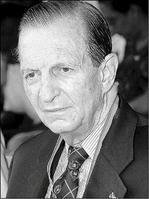
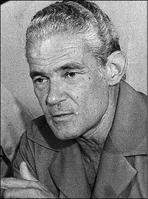
Edward Seaga and Michael Manley
deep bind
We are in a much deeper and profound bind than many of us realise. And because our politicians from both parties have traded so much in our ignorance, they have a credibility problem to level with us now.
Our import bill is growing and we are simply not exporting enough to keep up. The country has yet to grasp the implications of the rise of China and India in terms of export displacement of developing countries like Jamaica; nor have we assessed the impact of the growth of countries like Vietnam, Cambodia, and Laos, formerly locked away in the communist bloc. These countries have now entered the market and their peoples have the discipline, stamina and cultural orientation to put in the kind of work at competitive wages which would put our workers to shame.
Protected markets are becoming a thing of the past, development aid has declined significantly, and the financialisation of the global economy is producing stresses and strain which are not auguring well for us. Besides, climate change is already having its deleterious effects.
Some thought that with a Jamaica Labour Party (JLP) victory the country would be flooded with foreign investors eager to open factories and office complexes for our unemployed to get jobs. It was not just because of 'the wicked PNP Government' why foreign investors were not flooding the country before the elections, and why the poor could not get more of the pie. (No more than it is because of 'this wicked Government' why workers have to be laid off under the JLP. When will these politicians learn, or at least keep their nonsense to themselves?)
We have to go deeper than merely throwing money at the problem of crime if we really want to make a dent.
partisan feelings
Permit me to stir up some partisan feelings in some readers by saying that when Michael Manley warned us in the 1970s that if we did not deal with the issues of poverty, marginalisation, dehumanisation, inequality and the disrespect meted out to the underclasses, we would reap the whirlwind. We allowed Cold War politics and hysteria to frighten us away from considering the significant issues he had put on the table.
Forget now Manley's prescriptions. We all know they did not work. He himself came to see the folly of some of those main prescriptions, and even the communists now openly acknowledge their economic naivety. Let's deal with Manley's analysis, not his 'solutions'. Manley, as a man from the Jamaican aristocracy, saw what he had a hard time understanding, how others in his class could not see: He saw that there was no way that the rich could go on accumulating wealth, engaging in conspicuous consumption, exploiting the underclasses and they just remain docile, loyal and complicit in their oppression.
Manley saw the fire. Perkins and others would say he contributed heavily to it, but be that as it may. Manley saw that unless the society addressed the issues of poverty, marginalisation, class and racial stratification, it would continue to throw up a group of angry, bitter, resentful and deadly people whom we could not control or build enough prisons for.
His democratic socialism philosophy, however misguided we judge it to be, was a deliberate ideological assault on the roots of our social crisis. What is now accepted as commonsense - that social intervention is needed to buy peace for ourselves - was stoutly resisted by the upper classes in the 1970s. Manley could have sold it less threateningly and could have been more skilful in the Cold War era, surely, but that aside, we have come a long way, baby.
There was another political leader on the opposite side of the Cold War battle, who was also a relentless advocate for the underclasses. That man is Edward Phillip George Seaga. There was a time when it would be considered schizophrenic for one person to praise both men in one breath. But the Cold War is over and we see more clearly now.
Seaga never came with the ideology of socialism but his interest in the poor was no less focused. Manley might have had better analytical tools with which to dissect the issues, but the anthropologist Seaga, ever since the 1950s, set his whole affections on the poor. Before Michael Manley was championing the cause of the poor and oppressed, Seaga talked famously in the 1960s of "the haves and the have-nots".
early warning
I sat in his office some years ago and read some of his early speeches in the House, and I was absolutely amazed at the force of his advocacy for the poor. I joked with him that he was a socialist, but just didn't know it. Seaga warned this country from the 1960s about the consequences of neglecting the poor and marginalised. Michael Manley and Edward Seaga have been vindicated. They were telling us decades ago that our neglect of the poor, our stratification and the glaring inequalities would be an albatross around our collective neck.
These two outstanding political leaders and champions of the poor knew that it would come to this because of our gross under-investment in the poor and marginalised. (And yes, many could say that Seaga has made more than his fair share of contribution to where we are today, but that is another matter and still does not detract from my main point).
Kamau Chionesu, in that highly reasoned article published in last week's Sunday Gleaner critiquing the proposal for preventive detention, notes that there is difference between the consensus on the need for social intervention and a commitment to social intervention. Excellent point. The ruling and upper classes don't understand what it would really take to make a meaningful social intervention in the inner cities. They don't understand how it will affect power relations. They feel palliative measures will work.
panic reaction
I laugh when bleeding-heart liberals from the upper middle class lecture me about the need for social intervention, poverty alleviation and 'dealing with the root causes of crime', rather than my 'panic reaction' of preventive detention and hard policing: For if they knew how dealing with the root causes of crime would affect their class position, they would perhaps think again.
Don Robotham puts it well in his online letter: "Crime is, therefore, a symptom of the failure of the uptown way of life and values. In other words, the overall character of the Jamaican society - its deep historic economic, social and racial inequalities which have got much worse over the years - this is the real issue. Formulating the issue as one of 'social interventions' lets the society as a whole off the hook."
clean out the garbage
To really deal with crime we have to go much further than social welfare and taking the garbage out of inner cities and providing their residents with cheap jobs. We have to affect the power relations in this society and deal with the class and racial injustices which are ingrained. Robotham and I, far from being mere 'short-termists', are actually more radical and long-term in our analysis and prescription than our middle and upper class detractors who claim to be giving long-term solutions.
The more the views of people like Chionesu become mainstream within Jamaicans for Justice, the more formidable would the group become in the marketplace of ideas.
But the next issue, apart from genuine commitment to the poor, is the critical issue of capacity. This is where the socialists and communists messed up in the 1970s. They engaged in a lot of wishful thinking and flights of fantasy.
The issue of capacity - whether we can really fund a meaningful social intervention programme to make a dent on crime - is all the more troubling, considering the structural weaknesses in our economy, our small size, import-dependence, tribalism, low social capital and global economic crisis. One thing is sure: There is no easy way out of his crime maze we have found ourselves in.
Ian Boyne is a veteran journalist who may be reached at ianboyne1@yahoo.com. Feedback may also be sent to columns@gleanerjm.com.


















