Don Robotham, Contributor
Levy
Do not panic - that is the new mantra. A person is murdered in broad daylight in the middle of Half-Way Tree and the gunman calmly strolls off. But we are urged not to panic. The murder rate for May increases by 100 per cent but Jamaica? No problem. Douglas Chambers is ruthlessly cut down in front of several witnesses - why the fuss? An attempt is made to murder Shalman Scott in Coral Gardens but don't worry about a thing, 'cause every little thing will be all right'.
As the blood flows, so do the clichés. Crime is a long-term problem which requires long-term solutions, some sagely proclaim. We have tried preventive detention before and it has not worked, mumble others. We need 'holistic solutions', whatever those are. The Cuban authorities have returned a notorious gunman from East Kingston to the Jamaican police. Forty-eight hours have long elapsed so his capable lawyers - God bless them everyone -must have secured his release by now. Writs of mandamus and certiorari would have flown fast and furious - procedendo for quo warranto? No matter that this may result in more murders in east Kingston. Habeas corpus must not be violated.
legalistic clichés
I doubt that there are many people left in Jamaica nowadays who are comforted by such legalistic clichés. Last week, the director of public prosecutions reported that instances of nolle prosequi increased 40 per cent from 2005 to 2006, from 164 to 230. These are cases which collapsed because the witnesses had vanished without a trace, some, no doubt, sent to join their ancestors. All the painstaking investigative work of the police and the diligence of the prosecution came to naught. The Government had no choice but to advise the court that they could not proceed - nolle prosequi. The guns barked, the witnesses fled, the cases collapsed, end of story.
Well, we now have another east Kingston nolle prosequi in the pipeline. Another will arise when those arrested for the murder of Douglas Chambers walk off as calmly as that gunman in Half-Way Tree. Ditto for those who shot Shalman Scott. We shall see what we shall see.
BLOWING GRAMMAR
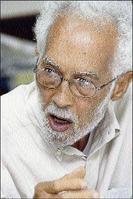
I have enormous respect for the work Horace Levy and others have been doing. Jamaican society is greatly in their debt for their courage and humaneness. But we should be clear about what transpired in August Town last week. Horace did not deny that in that peace, the state made huge concessions to the gunmen. He simply argued that this was a hard-headed recognition of the reality on the ground.
I have no problem with Horace brokering such a deal, as a private citizen. I also have little problem with Professor Gordon Shirley attending such a ceremony. After all, this is the campus backyard and Gordon would have been derelict in his duty to stand on the sidelines wringing his hands and gnashing his teeth.
But I have a huge problem with Deputy Commissioner of Police Shields being present and giving it his blessing. No matter the words of fire Shields breathed to the gunmen present, he was just 'blowing grammar', as our Nigerian brothers inimitably put it. His presence spoke louder than any words. The gunmen must have had a hearty laugh at the expense of 'Bredda Shields'. Catch me if you can!
Shields is a very high official of the security apparatus of the Jamaican state. The British state could well have afforded to make tactical concessions to the IRA in Northern Ireland - after, be it noted, it had established its military positions. But who can compare the tattered and tottering Jamaican state with the powerful and experienced British state with its vast financial resources, its stable political institutions, its BBC, its immense civil service machinery, its large national and regional police force, its Scotland Yard, its huge national army, its nuclear weapons and air force, its SAS, its MI5 and MI6 - and 7, 8, and 9 for all I know! This shows an astonishing lack of judgment on Shields' part. Woolmer redux.
The key difference between what is being proposed today and past detention practices is that the current proposal is for a law - and human rights - governed detention system. This makes it fundamentally different from all previous approaches, barring none. This is the first attempt ever to put a decisive aspect of security operations under the direct day-to-day operational supervision of human rights lawyers and advocates. This meets one of the long-standing demands of the human rights community and is a precedent of enormous proportions.
LAW-GOVERNED FORCE
The first thing to establish, therefore, is the precise standards of information which any detention order would have to meet. Would such an order have to rise to the current standards for an indictment, or would the standards be lower? How much lower, and in what respects? With the help of our experienced lawyers and human rights community we can define this quite stringently and reduce arbitrariness to a minimum.
The second thing to do is to ensure that no person can be detained who is not explicitly named on an approved detention list. The purpose of this is to deny the security forces the power to sweep up any and everybody, as they do de facto at present. Only those persons on the list could be detained legally, and the list could have a fixed duration and be public. Uptown detainees would figure prominently on any such list.
The third thing is to ensure that experienced lawyers, judges and human rights advocates sit on the body which approves the names on the detention list. The purpose of this is self-evident - to prevent class and political bias and to minimise human rights abuses. Broad press and civil society involvement could also be agreed.
The fourth thing is to ensure that any person detained is placed in humane conditions. This is probably the hardest condition of all to meet, but it is essential. The key point here is for us to recognise that the detention of a person, even a monster, does not deprive him of all rights.
the right persons
On the contrary, because we are trying to use the state to re-establish the rule of law it is of the highest importance that detention be humane, rehabilitative and at all times be a law-governed process. For example, a person detained would be entitled to legal representation provided at state expense, if necessary, and would still retain other important rights, such as the right to remain silent. The key here is to select and train the right persons to run and staff such a detention centre, and to have vigorous and empowered human rights governance at the operational level, including open access by the media.
Fifth, a system of appeal and parole must be developed whereby the detention list is subject to regular review by a duly constituted body.
Finally, we would have to determine how to deal with the inevitable successors of those detained. Should we detain them as well, or should we have a system of serving them with a warning order at the time of the detention of their leader, or some combination of both?
never say never
The devil here is in the detail, and many will have better ideas and other issues which we must take on board. The point is to stop paralysing our will with the words that 'all this has been tried before and failed'. Take a leaf from Danville Walker's book - never say never. A surgical and legally regulated use of proportional force by the state under human rights supervision has not been tried in Jamaica. Besides, no one is arguing that preventive detention alone should be used. It is simply one very important tool in our arsenal.
If we don't address crime and corruption in the short term, there will be no long term, period. It is pointless, too, to claim that we need social interventions. That is hardly news. But any social projects embarked on in the present context will simply mean putting more money in the pockets of the dons. The dons will grab the social intervention contracts and harvest them in practice! So, the effect of social interventions in the present context will be to strengthen criminality and garrisons at the local level. Social intervention of this nature will hasten the further collapse of the Jamaican state. Besides, we do not have the huge sums needed to finance meaningful social interventions - we are talking about close to US$1 billion here.
We are in an extremely difficult and dangerous situation. The least we can do in honouring those whose lives have been lost is to set our differences aside, concentrate on what unites us, and to focus our minds on arriving at practical solutions to the detailed issues at hand.
Please send feedback to columns@gleanerjm.com.


















