
Tony Becca FROM THE BOUNDARY The third and final Test match of the cricket series between the West Indies and Australia enters its fourth and penultimate day at Kensington Oval today, and despite the glorious uncertainties of the game, based on the action going to lunch on yesterday's third day, the Aussies appear set to make it two-nil.
Whatever the result, however, based on their performance in the series up to the end of Australia's first innings on Friday morning, the West Indies have done quite well, whether they win this Test and draw the series or not, they will have done reasonably well, and every West Indian should be proud of their team, and especially so pace bowlers Jerome Taylor, Fidel Edwards, Daren Powell, and Dwayne Bravo, and batsmen Ramnaresh Sarwan and more so Shivnarine Chanderpaul.
still a far way off
While it would be celebrated right around the region and wherever in the world West Indians are gathered, victory, however, as improbable as it seemed up to yesterday, would only be, and should only be, an encouragement - and it should only be so because, as well as they have played this series, West Indies cricket is still a far way from what it used to be, from where it should be, and from where the fans want it to be.
As well as Taylor, Powell, Edwards, and Bravo have bowled in this series, the West Indies still need at least another quality fast bowler, they still need to find a class spin bowler, and as good as Xavier Marshall looks and even if Marlon Samuels was available, but for Chanderpaul and to an extent Sarwan, the West Indies batting would have been embarrassing.
In other words, as good as the team has performed, even though, up to the second day of the current Test match, they have given the world number one, the world champions, a run for their money, for them to be consistent, for them to be numbered among the best once again, apart from turning all-rounder Bravo into a quality number six batsman, apart from turning Denesh Ramdin into a wicketkeeper-batsman capable of making runs at number seven, the West Indies need to find one or two fast bowlers, one or two spin bowlers, and two, three, or four batsmen, not to mention some consistently brilliant fielders.
According to the West Indies Cricket Board, however, they have plans to find these players, to develop them, and to pass them on to the West Indies team.
Apart from the fact that such plans have been made before - many times before at that, and that apart from the fact that such plans have been announced before - many times before at that, the WICB, however, should remember two things.
The WICB should first remember the structure of West Indies cricket, and then it should remember that nothing that is built from the top can last - that a strong foundation is important, very important, in any worthwhile construction.
The foundation of West Indies cricket starts with cricket in the schools, then it goes to cricket in the clubs, and then it goes to first-class cricket in the territories where the best, based on performance, are selected to form the West Indies team.
In other words, the love for the game is planted, most times, in the schools, talent is nurtured and developed in the clubs, and skill is paraded, in first-class competition, for the territories against the territories.
At that level, the West Indies selectors come in, sit down, look at the players, and select the best to represent the West Indies.
It is as simple as that.
the importance of clinics
Things like camps and clinics are important to develop team spirit - and especially so because of the many different islands and the insularity that has always been around the West Indies team and is still affecting the West Indies team. However, while the West Indies Board should oversee everything in West Indies cricket, the development of cricketers - of batsmen, bowlers, wicketkeepers, fielders, and captains, must be the responsibility of the territories through their schools and their clubs.
Remembering, for example, that the territories are so far apart, that, apart from many other things, they play cricket at different times during the year. Club cricket is important to the development of the players and therefore the presence of the players in club cricket is necessary. It is better to play competitively than to be constantly in the nets. It cannot be any other way.
If the members of the board do look back, they will probably ask themselves from whence came the likes of Learie Constantine and George Headley, Sonny Ramadhin and Alfred Valentine, Frank Worrell, Everton Weekes, and Clyde Walcott, Wes Hall, Charlie Griffith, Gary Sobers, Collie Smith, and Rohan Kanhai, Viv Richards, Lawrence Rowe, Alvin Kallicharran, Clive Lloyd, Roy Fredericks, Gordon Greenidge, Desmond Haynes, Andy Roberts, Michael Holding, Joel Garner, Colin Croft, Malcolm Marshall, Richie Richardson, Curtley Ambrose, Courtney Walsh, Brian Lara, and of course, Chanderpaul?
Should in case the board members do not remember, they, the great men of West Indies cricket, came from the schools - elementary, primary, and secondary, from the clubs, and from the territories. That is where they learned to bat, to bowl, to field, to captain teams, and most importantly, that is where they learned to compete on all kinds of pitches, in different conditions, and in varying situations.
Not one of them came from any where else - from private tutoring, from extra lessons, so to speak.
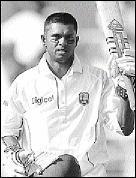
Chanderpaul


















