The danger of plagiarism
published:
Sunday | June 15, 2008
Latoya Campbell, Outlook Youth Writer
-Contributed
'See me after class' were the words written in bold on the front of my essay. I cautiously approached my lecturers whose facial expression made it clear that I was in trouble. The evidence punched me in the face; down to the hyperlinked words that I had carelessly forgotten to remove. What seemed to me, at the time, to be an easy way of getting my assignment completed on time, produced consequences for which I was not prepared.
Far-reaching consequences
Plagiarism affects us all, even without knowing it. Many persons, when asked what the term meant, could not give an answer. Nevertheless, the consequences of being caught plagiarising are sometimes very drastic. Also, they are often stipulated in rule books for numerous high schools, colleges and universities in the island.
Cut-copy-paste
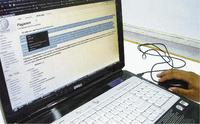
One major factor which contributes to plagiarism is the World Wide Web. Indeed, though the Internet has proven to be a great alternative to the library, it brings an ultimate disadvantage. So easy it is to 'Google' a topic, then copy and paste it into a word document without first analysing the information.
Wikipedia as a main source - http://www.wikipedia.org/
This free online encyclopaedia has been bookmarked by many and noted as the main source for numerous research projects. Indeed, it has information on just about everything. Although it has proven to be an accurate source for the most part, one should take into consideration that the information provided is from numerous persons, some of whom may not be fully knowledgeable on the topic that they have posted information about. Always get a second opinion from another source if you find yourself questioning the accuracy of the information provided.
For more information: http://www.firstmonday.org/issues/issue11_11/chesney/index.html
Tips for effective reading
Read the text at least three times. The first reading should give you a general understanding of the content and the second time creates an understanding of what is being said. By your third read you should have a full understanding of the content.
After reading, highlight the main points then rewrite them in your own words.
While researching, write down all the sources that you have used information from. That makes it easier to cite sources as well as compile a bibliography.
How can I avoid Plagiarism?
Shannon, 20. "If you copy directly from a source, for instance, to get a quote, ensure that any hyperlinks are removed from the text and that you clearly identify the source of the information."
Shereen, 22. "I often find myself copying information from Internet sources and closing the page before I've identified the website. It's difficult to relocate the pages, especially if I'm not using my personal computer, in order to write the bibliography. When you use books, it is easier to cite the sources."
Dave, 19. "Try to relay the information from memory when rewriting, rather than looking at the source. If you want to include exact phrases then ensure that you make it obvious by highlighting them with quotation marks."
For more information: http://owl.english.purdue.edu/owl/resource/589/03/
Note: Plagiarism is a serious legal matter for which you can be dragged before the court and suffer the consequences if found guilty. You should note, too, that like Internet material, you could easily find yourself with legal problems if you plagiarise books or any other intellectual material belonging to other people. If you did not get their permission to use their work, but did so anyway, and then quote them as sources, you could still be in trouble, depending on the amount of their work that you reproduced. So be careful.
POLL QUESTION:
Do you think that using books and other physical media rather than Internet sources will help to reduce plagiarism?
RESPONSE
Strongly agree 22%
Agree 50%
Disagree 28%
For the most interesting teen issues and styles, get your copy of Youthlink magazine on newsstands on Tuesday.