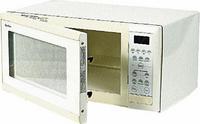
Is microwave cooking safe?
published:
Sunday | June 15, 2008
When it comes to the microwave oven, the number one fear which people have is that microwave cooking can somehow make us sick or even give us cancer.
But, you have less to fear than you think.
The immediate advantages of using this oven includes the fact that the microwave won't heat up your kitchen, leaving you sweating.
retains more nutrients
Oven cooking also retains more nutrients during the cooking process. Some foods, like vegetables, have better taste and texture.
nuclear power
Consumers often associate microwaves with nuclear power. Advice from researchers is that - if you follow operating instructions - the ovens are safe. You should also watch your children around them and use an oven mitt.
Microwave ovens use a type of energy called electromagnetic (EM) radiation to warm your coffee and heat other foods. While high-energy forms of EM radiation, such as X-rays, can cause cancer, infrared and microwave radiation can't, because they don't have enough power to damage your DNA.
This is the word from Gary Zeman, ScD, a certified health physicist in Berkeley, California, and spokesman for the Health Physics Society in the United States.
no contamination
Microwave cooking will not make food radioactive either, or change its protein structure, or contaminate it in any way, once microwave radiation is absorbed by food and transformed into heat.
Usage tips
If your microwave is in good working order and you want to be extra safe, standing four feet away from the oven dramatically reduces radiation exposure - to just one hundreth of the maximum amount considered safe.
Avoid serious burns from hot containers, overheated foods, and injury from exploding foods.
Prick cooking pouches and foods that have tight skins (e.g., tomatoes, hot dogs) to release steam as they cook.
Never cook eggs in the shell. If you crack an egg open to cook in the microwave, be sure to prick the yolk before cooking.
Remove lids or caps from containers, and cover with microwaveable plastic wrap (don't let it touch food), waxed paper, or parchment paper for cooking.
Never turn on an empty microwave. Try keeping a glass of water or a box of baking soda in the oven just in case.
Regularly clean the inside, the door, and the seal with a mild detergent and water.
Never operate the oven when something is caught in the door.
Remove metal twist ties from bags. They act as antennae and can cause a fire.
Never use brown paper bags for popping popcorn. They can catch fire, too.
When heating milk in the microwave for babies, make sure that there are no 'hot spots'. 'Hot spots' develop because microwaves heat foods unevenly, where some sections are much hotter than others. There might be sections of the milk which are burning hot. It is recommended that you shake the milk bottle, or liquid container, and let it stand for 30 seconds before checking the temperature.
The journal Environmental Nutrition suggests not using the microwave to heat infant foods - either bottles of formula or baby food - because the uneven heat can cause a baby's mouth to be seriously burned.
In general, every microwave recipe has a specified standing time. The dish or casserole must stand on a solid surface to retain heat and finish cooking.
Microwave ovens cook by making water, sugar and fat molecules vibrate, creating heat. Standing time allows heat to spread, cooking to finish, and allows the temperature of the food to stabilise and moderate.
Information sources: www.prevention.com, busycooks about.com and www.goaskalice.com