Omar Davies, Opposition Spokesperson on Finance and the Public Service
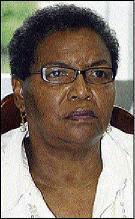
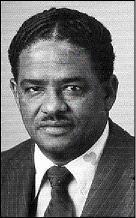
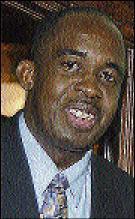
( L - R ) Tyndall, Rattray, Hylton
A: INTRODUCTION
| 1. | The problem which faced many institutions in Jamaica's financial sector in the mid-1990s is well known. There-fore, I need not rehearse the history of the collapse. |
| 2. | Suffice it to say, that several local banks, building societies and insurance companies were affected. |
| 3. | Contrary to misinformation promulgated, not all local institutions were affected. For example, no credit union, nor any of the security dealerships were affected. |
| 4. | The persons who were affected may be categorised into three distinct groups: |
|
(a) the depositors, owners of insurance policies and contributors to pension funds managed by insurance companies;
(b) the managers/owners of the failed institutions;
(c) the borrowers (often "con-nected parties") from those institutions.
| 5. | It is important to note that neither the Government nor any state agency was involved in any contractual arrangement with any of those three groups. To be clear, the Government accepted no deposit, issued no insurance policy nor made any loans. |
| 6. | The problem arose when the assets (the loans of these institutions) decreased in value even whilst liabilities (deposits plus interest, etc.) were growing. |
|
B: FINSAC
| 1. | Before addressing how the issue of the bad debts was dealt with, it is imperative to, once again, place on record the reason for the establish-ment of FINSAC. That institution was established with two principal objectives: |
|
(a) to protect the depositors, holders of insurance policies and pensioners, whose funds were being handled by the failed institutions; and
(b) to restructure the bad banks, disposing of them and thus restoring order to the financial sector.
| 2. | To do this, FINSAC was authorised to assume the liabilities of the intervened institutions and to take over whatever assets there were. Obviously, in all cases the value of the assets was far exceeded by the liabilities. |
| 3. | It must be emphasised that FINSAC was never meant to protect owners and senior managers of the failed institutions nor borrowers who had failed to honour their debt obligations. It cannot have escaped attention that these two groups have been the most vociferous in this debate. |
| 4. | Notwithstanding, in treating with the bad debtors, FINSAC took unusual steps in their favour, which no normal financial institutions could afford, or would be willing, to take. For example, the interest rates on all bad loans were reduced and any payment made was applied first to principal. |
| 5. | Thousands of persons with bad debts accepted the offers, made in the restructuring exercise, and settled with FINSAC. However, several persons, for whatever reason, did not settle and the decision was made by the administration to package the bad loan portfolio and invite bids for its purchase. |
| 6. | It is a matter of record that this package of bad loans was advertised both locally and internationally and that bids were received and evaluated. Any suggestion that there was impropriety is, therefore, not only mischievous but also disingenuous and, moreover, dishonest. |
| 7. | Beal Bank, an institution duly registered with the FDIC in the US, emerged as the successful bidder and established a local company, Jamaica Redevelop-ment Company (JRF), to carry out its business here. |
| 8. | Before the bad loan portfolio was handed over to Beal Bank/JRF, Cabinet took the decision to make a final offer to those individuals whose loans had been secured by residences. This offer was publicised in Parliament and through the media by means of paid advertisements. |
| 9. | Specifically, the offer allowed those bad debtors who were owners of residences with a value of up to $5 million (at that time US$120,000), to recover their homes by either (a) paying 80 per cent of the principal or (b) accepting a mortgage for 100 per cent of the principal for 20 years at 20 per cent per annum. |
| 10. | The understanding arrived at with JRF/JOSLIN was that they would honour the terms of the agreement with anyone who accepted the Govern-ment's offer. |
| 11. | To dispel any notion of impropriety in the handling of the failed institutions, it is important to point out that the management of FINSAC has always been carried out by reputable persons of great probity. This fact is irrefutable. I place on record the names of three such distinguished Jamaicans, who chaired the Board at different points in time: |
|
(a) Dr Gladstone Bonnick, former head of the PIOJ, former deputy governor of the BOJ and retired senior official at the World Bank;
(b) The late, former solicitor general, Dr the Honourable Kenneth Rattray;
| (c) The Honourable Shirley Tyndall, former financial secretary and present chairman of the Contracts Commission. |
| 12. | Mr Patrick Hylton, present CEO of NCB, served as |
| CEO of FINSAC under the chairmanship of all three. |
|
C: THE PROPOSED COMMISSION OF ENQUIRY
| 1. | Against that background let me now address the Govern-ment's announced intention to appoint a commission of enquiry into the factors which led to the collapse of the financial sector, as well |
| the operations of FINSAC, generally. |
| 2. | The Opposition welcomes this initiative and hopes that it will bring some closure to the debate. Let me quickly state, however, that the Opposition's support of the proposed commission of enquiry is subject to our being able to participate in defining its terms of reference. |
| 3. | At this same stage it |
| is important to explain why, as government, we were hesitant to appoint such a commission. |
| 4. | The main factor influencing that previous stance was that officials with intimate know-ledge of information, governed by banker/client relationship, are likely to be called upon to give evidence. |
| 5. | With this in mind, it was felt that an enquiry might result in possible legal implications, in terms of possible breaches of confidence. |
| 6. | For my own part, I have, at all times, refrained from divulging sensitive infor-mation which came to my knowledge in my capacity as minister. |
| 7. | However, the actions and utterances of senior members of the present administration leave me no option but to make some important and necessary disclosures which will impact on the terms of reference of the proposed enquiry and, hopefully, ensure the integrity of the process. Moreover, it is in the public interest that these disclosures be made at this time. |
|
(i) It is a fact that a present senior member of the Cabinet was a shareholder of an intervened institution, the depositors of which had to be compensated by FINSAC.
(ii) It is a fact that at least four Cabinet ministers of the present administration, inclu-ding the minister of finance and one minister of state, had their bad loans acquired by FINSAC because of their failure to service their debts with the institutions from which they borrowed.
(iii) In each instance, despite attempts by FINSAC to restructure the loans, these debts were not settled and were consequently sold to JRF.
| 8. | The position of the minister of finance and the public service, the chief advocate for this enquiry, is of particular concern to the Opposition. His involvement in the process raises serious questions of conflict of interest. |
| 9. | It is a fact that he had a bad loan with one of the intervened institutions. It is also a fact that this bad loan was bought by FINSAC and restructured after negotiations with the minister, at a fraction of the original amount, by way of written agreement signed by him. |
| 10. | It is a matter of record that he did not fully honour the terms of the restructured agreement and so his bad loan was among those packaged and sold to JRF. |
| 11. | The minister, therefore, has no moral authority to lead the process for an enquiry and the Opposition, on behalf of the Jamaican public, demands that he completely recuse himself from any further involvement in the matter and allow the process to move forward independently. |


















