Tendai Franklyn-Brown, Staff Reporter
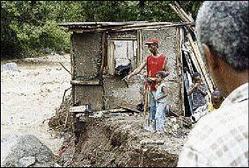
Residents of the Mammee River community view the aftermath of heavy rains in Gordon Town, St Andrew, in July 2005. - File
Government's inability to relocate illegal settlements located in river-beds and gullies, as well as to enforce tough legislation, has been criticised by a leading environmentalist.
Peter Espeut, sociologist and activist, argued that informal settlements pose environmental and developmental risks to utility agencies, as well as the lives of the inhabitants.
"Ultimately, even before it is an environmental concern, it is a human concern, because when river come down, their lives are at risk, and we're talking about children here, not just adults. This is a governance issue."
Level of protection
Espeut said these river courses should receive the same level of protection as other environmental habitats, such as coral reefs, forests and mangroves.
"Families living in such areas are not there because they want to. I don't believe any squatters wish to live in a riverbank where they could be washed away. They live there because they have nowhere to live," he said.
The National Solid Waste Management Authority (NSW-MA), which is responsible for cleaning some drains and gullies, has in the past suggested that the dumping of refuse in water channels by citizens in informal communities increased the likelihood of flooding.
Collection headache
At a recent Kingston and St Andrew Council meeting with the parish disaster and public health committee, NSWMA Public Cleansing Manager Ralston Peters said collection remained a headache for the waste agency, leading to the institution of solid waste monitors.
"There are times in the daily operation where we will go and have small meetings with the communities, but they need to start policing the areas and notify us of repeated offenders," Peters advised.
Jamaica's location along the Caribbean's hurricane belt leaves it vulnerable, particularly during active Atlantic storm seasons. The island was hammered by Hurricane Dean last August, even though the storm drifted south of the country. Jamaica racked up billions of dollars in infrastructural damage and devastation of the agricultural sector.
tendai.franklyn-brown@gleanerjm.com