Ceila Morgan, News Editor - Radio
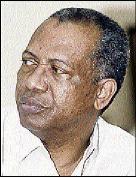
Dr Winston Davidson - For Diabetes feature - Contributed
A leading public health specialist is recommend-ing that the Government strengthen its primary health-care system as it abolishes user fees at public hospitals and health centres.
Dr Winston Davidson believes that if the Government can develop an effective system of health care at the community level, then this could significantly cut costs.
In addition, he says, over time, the JLP administration will have to consider the use of technology and automated systems in the public health sector to further reduce costs.
"Persons within the system who now are in a position to be morphed will have to move into these areas. The longer you delay it is the more it costs. And if you are dealing with a service-driven economy, you have to put that in place and soon," he told The Gleaner.
The Government has already indicated that the abolition of the user fees at public health facilities will cost $3.85 billion.
Health tourism
Ruddy Spencer, the health minister, says three investors have indicated an interest in pursuing plans for health tourism which is one source of recommended funding for the health sector.
In addition, the health minister says there will be further dis-cussions with Cabinet in another two weeks to develop plans for the advancement of telemedicine technologies in the island.
Telemedicine allows for doctors to manage and monitor their patients from a geographical distance using audio, video or computer technology.
It also enables doctors to collaborate on patient care, participate in diagnostic procedures and keep abreast of current practices.
"It basically involves a combination of information technology with the management of health information to allow for patient access at any time and any place," Dr Davidson, who heads the Telemedicine Research and Development Unit at the University of the West Indies, Mona, explained.
Main problems
According to the Alma Ata Declaration at an international conference in 1978, "Primary health care addresses the main health problems in the community, providing promotive, preventive, curative and rehabilitation services."
Currently, there are more than 350 community-based health centres across the island.
Dr Davidson says for primary health care to be effective, it must be based on several components which include maintaining a healthy lifestyle, protection against the risk of certain diseases such as malaria and early detection.
He also says the private sector will have to play a role in the development of the public health sector.
"You are going to give access to every individual to primary health-care facilities without cost and that is basic. But when you move now to a higher qualitative level at the hospital, you have to put in place the resources to not only maintain that quality, but to improve it and be part of a system of global delivery."
Not trained
Dr Davidson says that a number of persons currently working in the primary health care system are not trained to do so, even though they carry out certain functions.
At a recent press conference to outline details of the new health user-fee policy, the health minister promised that there would be a repositioning of the primary health care system to accommodate some patients who are currently at public hospitals.
However, he acknowledged that some health centres are still without adequate medical personnel.
The regional health authorities have been given the task of recruiting the required personnel to ease the current shortage of 1,562 personnel in critical areas such as pharmacists, doctors, nurses and community health aides.


















