What gout's about
published:
Saturday | March 29, 2008
Heather Little-White, Contributor
Gout is not as common as the flu, but it is a debilitating disease that has been around for a very long time. Historically, it was common among royalty and other rich families who could afford to eat and drink lavishly, putting themselves at risk. Gout was dubbed the 'disease of kings' and is caused by poor food choices and excess body weight. Hippocrates, in the fifth century BC, described the oldest known type of arthritis as gouty arthritis.
The breakdown of proteins results in uric acid, which is normally eliminated by the kidneys. However, when the kidney is malfunctioning, the build-up of uric acid forms crystal deposits in the joints, resulting in pain and swelling.
Older men
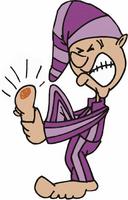
Gout is more common in older men, and pain associated with the disease usually intensifies and may even run for a number of days. The first sign of gout is severe pain, swelling and redness in the big toe, but the feet, ankles, knees, elbows or fingers may also become pained and inflamed.
According to the Johns Hopkins Arthritis Center, no presentation of gout would be complete without Thomas Sydenham's 1683 description of an acute gout attack. Dr Sydenham himself suffered from gout.
"The victim goes to bed and sleeps in good health. About 2 o'clock in the morning, he is awakened by a severe pain in the great toe; more rarely in the heel, ankle or instep. This pain is like that of a dislocation, and yet the parts feel as if cold water were poured over them.
"Then follow chills and shivers and a little fever. The pain, which at first is moderate, becomes more intense. With its intensity, the chills and shivers increase. After a time, this comes to a full height, accommodating itself to the bones and ligaments of the tarsus and metatarsus.
"Now, it is a violent stretching and tearing of the ligaments - now it is a gnawing pain, and now a pressure and tightening. So exquisite and lively, meanwhile, is the feeling of the part affected, that it cannot bear the weight of bedclothes nor the jar of a person walking in the room."
If you are experiencing pain in the joints, visit your doctor. As part of the analysis for gout, your doctor may use a needle to take a fluid sample from the affected area. Laboratory tests are done on the sample for uric acid crystals. High levels of uric acid are usually, but not always, associated with gout. If gout is diagnosed, medication is prescribed to reduce the number of attacks as well as the intensity of the pain.
Balanced meals
Critical to the treatment of gout is good nutrition, which includes balanced meals with moderate amounts of meat and fish, drinking lots of water, limited alcohol consumption and shedding excess weight. Cod liver oil has been routinely prescribed for diseases of the joints and spine, including chronic rheumatism and gout. Eating red or black cherries or drinking the juice has been touted as a cure for gout. Likewise, an early pharmacopoeia has shown that strawberries are very efficient in the treatment of gout.
Sure-fire tips on cutting risk while cutting calories
Gout prevention watchlist
In general, limit foods high in purines.
Red meats are extremely rich in purines.
Smaller amounts of purine are found in other meats, fish and poultry foods and eggs.
Limit animal protein in your diet to no more than five to six ounces of lean meat, poultry or fish a day.
Limit consumption of organ meats (liver, heart and kidneys), herring, processed meats (hot dogs, sausages), mackerel, anchovies, trout and seafood.
Beans and peas contain a moderate amount of purine.
Consume limited amounts of rich foods like cakes, sugary products, white flour.
Drink plenty of fluids, which helps remove uric acid from the body.
Limit consumption of alcohol. Drinking too much alcohol interferes with the removal of uric acid from the body increasing the risk of excessive uric acid in the urine.
Maintain a healthy weight. Excess weight puts more stress on your joints and increases the risk of hyperuricaemia and gout. If you are overweight, use sensible strategies to lose weight.
Avoid low-carbohydrate diets that are high in protein and fat, which can increase hyperuricaemia.
Watch products with acetaminophen and low doses of aspirin.
Risk factors
Excess weight
High blood pressure
Excessive alcohol consumption, especially beer, red wine and distilled spirits. Beer is high in purine, converted to the body as uric acid which brings on pain and swelling
High consumption of red meats.
High consumption of fatty foods, including pork fat
Medication like diuretics, aspirin and other drugs containing salicylic acid, niacin, and lovedopa (for Parkinson's disease)
Banned foods during gout attacks
Artificial sweeteners
Sugar-sweetened carbonated soft drinks
Cigarettes
Chocolate
Coffee
Pasta
White and wheat breads
Refined and iodised table salt
White rice
Vinegar
Heather Little-White, PhD, is a nutrition and lifestyle consultant in the Corporate Area. Send comments to editor@gleanerjm.com or fax 922-6223.