Neville Spike, Business Writer
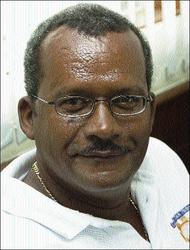
Donnie Bunting, who began his farming career at Longville Park, now operates his thriving fish farm from the family property, which was once a dairy business. - File
In 1989, Clarendon fish farmer Donnie Bunting faced a tough choice: Should he continue in the family-run dairy farming business, which showed all the signs of being on its last legs or get into fish farming, a new, but potentially lucrative business?
He had all of three minutes to make up his mind. The ultimatum came from his father, Juan Bunting, who learned that Donnie had acquired a fish farm in Hill Run, St Catherine.
Juan Bunting, who acquired Longville Park Dairy Farm in 1970 and built it into one of the most efficient dairy farms of the period, wasn't enthused by inland fish farming and told Donnie to 'sell the fish farm or resign from the family-owned dairy business'.
He chose the latter.
In the end, the decision has not only turned out well for Donnie Bunting, but also to the inland fish farming sector in which he has become a key supplier.
When the ultimatum came to choose between inland fish farming and dairy farming, the younger and more in-tune Donnie was already seeing signs of decline written all over the dairy business - mounting input costs, falling prices and unrelenting competition from subsidised dairy imports.
He recalls the conversation: "How much notice do I need to give you?" enquired Donnie, in his 30s at the time. "You have three minutes," replied the elder Bunting.
Studied Dairy Science
In the end, Donnie, who studied dairy science at Somerset College in the UK, needed less than the three minutes Juan Bunting had given him, to make his life-changing choice.
Watching the decline in the price of cattle at Longville Park from 1974 onwards was all the proof he needed that the dairy industry wasn't going anywhere fast. And for Donnie, brother to parliamentarian and former investment banker, Peter Bunting, it was better to face up to the truth now rather than later.
"In 1974, four heads of cattle could buy a brand new Volvo for my mother, Miss P," Donnie says. "But by 1989 it was taking more than 400 heads of cattle to buy the same Volvo and even then that amount of cattle wasn't enough to cover the insurance. It's not the type of business one would want to stay in."
Since making his choice, Bunting has grown his inland fish farming business into the largest independent inland fish farm on the island.
In a sector which produced 3,600 tonnes (7,200,000lb) of fish last year, Longville Park accounted for 120 tonnes (240,000lb) or 3.3 per cent of total industry output.
A 3.3 per cent contribution to the sector is hardly striking. But what Bunting and his farm lack in volume output is more than made up for in the level of respect he enjoys in the industry.
Former Agriculture Minister Roger Clarke, for example, describes Bunting as an 'innovator and role model'.
"It's hard to find a better role model for young people thinking about getting into farming than Donnie Bunting," says Clarke.
John Carberry, managing director of Jamaica Aquaculture limited, 1998-2005, describes Donnie Bunting as an "innovative pioneer" in the inland fish business.
"He wasn't the person to introduce inland freshwater fish farming in Jamaica," said Carberry. "There were others before him. But since coming into the business, he has done invaluable, pioneering work which has benefited the entire sector."
"What separates him from many others who were in it before him was that while they treated it as a hobby, as a sideline, he was totally dedicated and reliant on it for his living, which made him take it more seriously."
"Donnie Bunting is a helpful but fierce competitor" says Dr Fred Hanley, technical director, Aquaculture Jamaica Imitated. "He keeps us all on our toes."
370-acre property

Signs of the once thriving dairy business are still in evidence at Longville Park. On a daily basis, pickup trucks and tractors criss-cross the 370-acre property, divided by the Freetown to Salt River Main Road on the border between Clarendon and St Catherine.
Huge galvanised feed bins in which feed was once stored for the hundreds of milking cows that roamed the farm, are still standing. So too, are some of the feeding troughs in which the cows were fed, parts of the milking parlour and the pens in which the cows were corralled before milking.
That's about as much as you'll see of dairy farming at Longville Park these days. Since returning there in 1992, Donnie has changed the focus of the farm.
Instead of grazing cattle among the trees and grassy fields of Longville Park, you'll encounter Barbados black belly sheep munching grass on the sides and verges of the 70-plus ponds.
The black bellys were initially used in the place of lawnmowers to maintain grass levels around the ponds, which range in size from one to three acres.
Now the ponds are emptied and restocked each week with baby tilapia or fingerlings from an on-farm hatchery.
From the hatchery, fingerlings get transferred to nursery ponds where they stay for two months on average, and later to grow out ponds, before being reaped.
The process from hatching to reaping takes place in 72 ponds or 60 acres of water. The 60 acres produce 10 tonnes or 20,000lb of tilapia per week.
But Barbados black belly sheep and inland fresh fish farming aren't the only changes you'll notice at Longville Park. The management style has also changed. During the days when dairy ruled, prominence was placed on trial and error and seat-of-the pants decision making.
These techniques have given way to decisions based on technology and scientific analysis. Critical inputs including how often fishes are fed, the quantity of feed dispensed and the time of day feeding takes place are stored on computers and probed for trends.
After daily chores of feeding, the taking of water samples and the measuring of fingerling growth, you'll find Bunting in his air-conditioned office or in his two-storey house on a ridge overlooking the farm, surfing the internet, with pen and notebook at hand, in search of new ideas or techniques to improve efficiency and output.
And when he's off the Internet, he's usually on his Toshiba Satellite laptop inputting data on to custom-made Excel spreadsheets. He uses the data to keep tabs on trends or past uses the data to keep tabs on trends or past performance and to make forecasts.
Quiz him on any aspect of the operation at Longville Park and you won't have to wait long for a response. "How many tonnes of fish do you produce and sell each week? He peers on his computer screen.
Highest producer
"What do you want - this month or last year? This month: "Around 10 tonnes," comes the reply. This figure makes Longville Park the second highest producer of fresh water fish in the island behind Jamaica Broilers, owners of Aquaculture Jamaica, with an estimated 70 tonnes (140,000 lb) per week.
"Which ponds are you reaping this week?" Not a problem either for Bunting and his spreadsheet.
"I can even tell the amount of feed each fish is consuming, or even how long it will take for them to reach a certain size, given the amount of feed each fish is consuming," he says. "This is a fantastic management tool."
It wasn't a fantastic or easy ride for Bunting at first. The first hurdle at start-up was getting the Jamaica Agricultural Development Foundation to give him a loan.
He had what he thought was a good plan to operate a thriving inland fish farm business. The JADF loan manager at the time thought otherwise.
Crestfallen and on the verge of departing the agency's offices, he spotted Dr Keith Roache, then managing director of JADF and someone whom he had known for a long time.
Donnie stopped by to say hello. "He asked me what I was doing there. I told him about my proposal and my disappointment at not getting the loan to acquire the business," he recalls.
'Leave the proposal with me', he said quoting Roache. 'I'd like to have a look at it'. Next thing I knew, they reconsidered my proposal and gave me the loan."
Biggest challenge
Within weeks of securing the financing, Bunting was to face his biggest challenge: the rupture of the Angel Dam in the Bog Walk gorge which sent millions of gallons of unwanted water into Hill Run where he had his farm. Initial reports suggested most of the farms in the area including Donnie's farm were all flooded out.
"I was very worried as I had just received the loan, and didn't even reap one pond of fish, when this happened," he said.
"I couldn't imagine how I was going to make the first payment, let alone survive in the business. I resigned myself for the worst."
But: "Miraculously, I didn't lose a single fish. In fact, I found other species of fish in the pond," Bunting said.
The uncertain days of 1989 are long behind him. Since then he has won numerous kudos for himself and his farm. In addition to being nominated for the Jamaica Observer 2004 man of the year award he has won the Jamaica Observer Food Award for 2003 and 2004 as well as the 'Jamaica Broilers Contractor Award for the most Productive Farmer 1993-1998.
In the 19 years he has been in the business, Bunting says that he has seen a lot of changes, but that more could be attained if only the authorities would give the sector the support similar to other countries.
In Taiwan, farmers don't have to breed their own fish. "They get stock from government. All they have to do is to grow the fish," says Bunting.
"In the US, universities do research and the government pays for it. In Jamaica, we have to do everything ourselves. If we had the support we could do far greater than we are doing."
nevillespike@yahoo.com


















