Mark Dawes, Staff Reporter 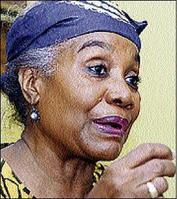
Professor Maureen Warner-Lewis - Photos by peta-gaye clachar/staff photographer
There was a strong genealogical factor that sparked her interest in Archibald Monteath.
For most Jamaicans, the name Archibald John Monteath does not mean much. But it was a name revered in the 19th century by Moravians, and newly freed slaves. After years of researching various sources including local and overseas archives and the diaries of 19th century missionaries, Professor Maureen Warner-Lewis has produced a book which documents the life and legacy of this icon of Moravian history.
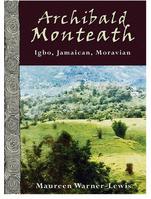
The 368-page book, Archibald Monteath: Igbo, Jamaican, Moravian, was published by the University of the West Indies Press and is the culmination of research that began in the 1990s.
Speaking with The Gleaner, Professor Warner-Lewis, who is Professor Emerita, in the Department of Literatures in English, at the Mona campus of the University of the West Indies, explained that there was a strong genealogical factor that sparked her interest in Archibald Monteath.
Her mother-in-law was a Monteith. The author is married to Garvey scholar, Professor Rupert Lewis, of the Department of Government at the UWI.
Family connection
When her husband was doing studies towards his Master's degree he encountered references to Archibald Monteath and it was then that they both began to wonder to what extent there was a family connection.
"I tried in subsequent years to encourage him to do more about it. But he never really showed much inclination to follow it up. But by 1991-92 I had finished my doctoral dissertation and I felt it was time now to do something about this Monteath story. I really began it as a genealogical project to see if there is a connection. I made extensive use of the Jamaican archives, and then the Moravian archives, which was some years ago given to the Jamaica Archives for safekeeping.
"I think I began that work in 1992, looking at certain family names from that New Carmel Moravian Church which is in St Elizabeth near the border with Westmoreland. I met a stumbling block in terms of his family connections. Both Archibald and the furthest relative of my husband's maternal line, belonged to the same church, and the same master, and this is why they bore the same name, but it did not of necessity imply a blood connection.
"In slavery times, a lot of fathers were often not named. For the furthest relative on my husband side, there is no father named."
"I decided to take a forensic approach. That is, I subjected all the episodes, all the named persons to check them out against the documentation of property owners, magistrates. I used archival evidence to flesh out the story of Archibald Monteath," explained Professor Warner-Lewis.
The missionaries were in general quite diligent in making diary entries. In several diary entries of Moravian missionaries the name Archibald Monteath kept recurring.
She notes in her book variations on the spelling of Monteath. But she surmised that the authentic spelling is 'Monteath' vis-à-vis Monteith.
Exactly when Archibald Monteath was born is a bit of mystery, the author acknowledged. The headstone of his grave records his birth as happening in 1800. Professor Warner-Lewis believes it might have happened about 1792-1793.
Much of the mystery surrounding his birth is located in the fact that it has not been established how old young Archibald was when he was captured in West Africa and sent to Jamaica. The professor speculates that he would have been of tender years, maybe about nine years old. The headstone does record accurately the year of his death - 1864.
Popular as an overseer
Archibald Monteath was a slave, but an overseer on a property owned by John Monteath in Kep, St Elizabeth. He was seemingly popular as an overseer with both slaves, his master and property owners in adjacent communities.
At about 32 years old, a slave from the neighbouring Paynestown Estate invited him to attend Christian services (Bible study/prayer meeting) at the home of her owners, Edward and Juliana Coke. (There are variations of the spelling of the surname. Other accounts say Cooke or Cook). He accepted. It was a life-transforming moment.
According to a contemporary biographer, Monteath reported, "Very shyly, I came into the house and waited outside the hall until a little bell announced the beginning of prayers. Mr Cook held the prayers. People sang, then he read a little from the Bible, and finally he prayed. I understood little or nothing of it, because I still knew nothing of the Saviour. Nevertheless, I will never forget this hour. It was one of the deciding moments of my whole life. I felt the presence of the almighty God, my Lord. I was deeply terrified; my limbs trembled. Unable to say a single word, I rushed away afterwards and stayed quietly at home."
Archibald Monteath faithfully attended the evening meetings in Paynestown and became yoked to the embryonic Moravian mission. "Sometime after that he was invited by some white people/property owners who were holding prayer meetings - who were heavily influenced by the evangelical movement out of England in the late 1700s.
"They asked him if he wanted to learn to read and write. And he said yes. He came out to be one of the few black people in that area and at that time who could read and write. This was a big advantage that he had," said Professor Warner-Lewis.
"There is evidence in the archives that he signed as godfather for children - he signed his own marriage documents, " the Professor said.
Some slaves laughed at him, and derided him for learning to read the white people's book. He was also subjected to persecution for this. But he was fixated on literacy and would not relent, the Professor said.
His English was not, however, impeccable. There are references in the professor's book where his phonetic skills were off base as in his pronunciation of Wedderburn by saying "Weddesburn".
"Years later, the missionaries realised that most of the people who they had as elders in the church were willing but could not read and write, and so they could not argue their cases as well in trying to make converts. But Archibald was more effective. He obviously had the gift of speech. He was an orator, it would appear from several references. He had the ability to move congregations. He was able to speak in such a way that the message got through to them in ways which the missionaries commented on several occasions," Professor Warner-Lewis said.
Archibald Monteath bought his freedom from slavery in 1837, one year before the abolition of slavery became a reality in Jamaica. The price for his freedom was £50. It seems he managed to save £40 and the missionaries helped him to find the extra £10.
Having secured his freedom, Archibald had one goal in mind, to serve the Lord as a full-time worker with the Moravian Church. He became a Helper at New Carmel Moravian Church. The professor records Moravian missionary John Elliot's description of the work of helpers as follows:
"To visit the converts from house to house and make themselves acquainted with their spiritual progress; to call upon the sick and report them to the missionaries; to labour among such heathens as they meet with and bring them to the notice of the missionaries; to exhort those converts who neglect the means of grace and report such cases to the missionaries; to settle differences and disagreements among their people, and in case they do not succeed in doing this, to call in the aid of the missionaries; to urge on the attention of parents the duty of sending their children to school; and to go after those who are under church-discipline and entreat them to forsake their sins and return to Jesus ..."
Gave 35 years' of service
On the occasion of his freedom from slavery, Archibald, who the book states was about 45 years old, had rendered more than 35 years of service to his master. "When other estate owners learnt of his discharge, they offered him paid positions on their establishments, which serves as testimony to his good reputation as an employee and leader," Professor Warner-Lewis wrote in her book. Furthermore, she continued, "Considering the high esteem in which he was held by the church authorities, one has every reason to believe that Archibald was a hard, unrelenting worker, who lived up to his superiors' expectations of his reliability.
Not long after Archibald began work as a helper at the New Carmel congregation, he was also made Helper for Moravian witness islandwide.
So highly regarded was Archibald, that the head of the Moravian Church in Jamaica at the time, Jacob Zorn, took the unprecedented step of writing to colleagues in Britain to contribute money so that the ex-slave could be paid a salary.
Monteath was a major force in the Christianising of the peasantry. Generally, the slaves and ex-slaves were favourably disposed towards him. Though questions hover over his role on the plantation as an overseer, some ex-slaves, the professor said, thanked him for instilling in them a culture of discipline, and not stealing, which they said, became invaluable coping mechanisms with the challenges of freedom.
Held in high esteem
When Archibald Monteath died on July 3, 1864, he was buried the next day. His funeral which was held at the New Carmel Moravian Church was attended not only by blacks but scores of whites. He died leaving a widow and two adult daughters. The esteem with which he was held was also evident in the stone slab for his grave and an elaborate biography that was prepared for his funeral.
Archibald was buried in the churchyard. He was given a gravestone that is similar in design and quality like those they used for the burial of foreign missionaries. The foreign missionaries are buried in a line going down the hill from the church. He is buried in the next row.
At his funeral, one tribute lauded him as "the most eminent for his truly Christian character, spiritual experience and varied usefulness who, for may years past, has been a true apostle among his countrymen".
Jamaicans, Professor Warner-Lewis can honour the memory of Archibald Monteath by doing three things.
First, take the time to learn about him.
Second, emulate Archibald who overcame the disadvantages of being a slave and became a person who strove for excellence in character and deed.
Third, emulate Archibald by becoming a person of immense goodwill, notwithstanding whatever insult and injury one might be forced to endure.
Send feedback to mark.dawes@gleanerjm.com