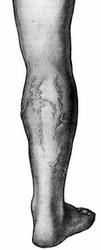
Varicose veins are twisted, enlarged veins. The word 'varicose' actually comes from the Latin word varix, which means twisted. The term commonly refers to the veins on the leg any vein may become varicose. Haemorrhoids (piles), for example, are simply varicose veins in the rectum and anus. A milder variation of varicose veins, spider veins, may occur on the legs or face and create cosmetic concerns.
Varicose veins are a common condition, affecting up to 15 per cent of men and up to 25 per cent of women. Varicose veins can cause pain, swelling and discomfort, and may sometimes lead to more serious medical problems like leg ulcers. Varicose veins signal some disturbance in the circulatory system and may suggest a higher risk of other problems in that system.
CAUSES
Only veins have varicosities. Arteries have thick walls and carry blood from your heart to the rest of your tissues. Veins have thinner elastic walls and return blood from the rest of your body to your heart, so the blood can recirculate. To return blood to your heart, the veins in your legs must work against gravity. Muscles in your legs contract to act as pumps, sending blood back to your heart through the elastic veins. Tiny one-way valves in your veins open as blood flows towards your heart, then close to stop blood from flowing backward.
As you get older, your veins can lose elasticity, causing them to stretch. The valves in the veins then become weak, allowing blood that should be moving towards your heart to flow backward. Blood pools in your veins, and your veins enlarge and become varicose. These veins appear blue because they contain deoxygenated blood. This problem appears to be familial and may have a genetic component.
Another cause of valve failure is deep vein thrombosis (DVT), which can cause permanent damage to the valves. Some pregnant women develop varicose veins as pregnancy increases the volume of blood in your body, but decreases the flow of blood from your legs through your pelvis back to your heart. Any other condition that can cause pressure in the pelvis, like uterine fibroids or chronic constipation, may also contribute to varicose veins.
PREVENTION and CONTROL
Varicose veins may be regarded as part of the price mankind has paid for the decision to stand upright on two legs. Modern medicine uses a wide variety of surgical procedures to treatthis common problem. But before resorting to those options, many lifestyle adjustments can reduce your chances of getting varicose and spider veins. They can also help ease discomfort and reduce the prominence of the ones you already have.
NUTRITION
Eat a diet rich in high-fibre foods as this reduces the chances of constipation, which can contribute to varicose veins. Seven to nine servings of fresh fruits and vegetables and whole grains are ideal. Soy, green tea and garlic are other foods that improve vascular health. Drink lots of water.
Control your weight to avoid placing too much pressure on your legs. The cellular nutrition programme is ideal for excellent nutrition and weight management.
SUPPLEMENTS
Having the omega-3 fatty acids, the B complex vitamins and the antioxidant vitamins A, C, E, and selenium, calcium and magnesium in optimal amounts is important.
The herbs horse chestnut, butchers broom and gotu kola are specifically used by herbalists to tone and strengthen the walls of the veins and reduce varicosities. I use such a herbal combination in a capsule form called Varitonin.
So, take good care of your veins.
Email Dr Anthony Vendryes at info@anounceofprevention.org or listen to his radio show on Power 106 FM on Fridays and Saturdays at 8:00 p.m.
EXERCISE AND ACTIVITY
Exercise regularly to improve the strength of your leg muscles, circulation, and your vein strength. Focus on exercises that work your legs, such as weightlifting, walking or cycling. Yoga, with special emphasis on the inversion postures like the shoulder stand, is extremely beneficial. Do not cross your legs when sitting and do elevate your legs as much as possible when resting.
Do not stand or sit for long periods of time. If you must, shift your weight from one leg to the other every few minutes, move around or take a short walk every 30 minutes.
Wear elastic support stockings and avoid tight clothing that constricts your waist, groin or legs.


















