Mel Cooke, Freelance Writer
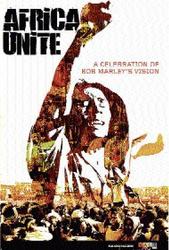
- Contributed
It is ironic that the reason I found Africa Unite far exceeding my expectations is the same reason why some will find that it falls short of theirs.
I sat down in Cinema 3 at Carib 5, Cross Roads, on Wednesday afternoon expecting to see an extended music video carefully cultivating the Marley mystique, and making a big to-do about the sons performing at the Africa Unite concert 2005 in Ethiopia. But then, I should have known that Stephanie Black, who did Life and Debt, was not going to throw up a song and dance on any screen, much less the big one.
So I really appreciate Africa Unite becaus it centres on the concert and is liberally sprinkled with Bob Marley's music (Africa Unite is recurring and gets extended play, but there are bits of Zion Train, Rebel Music, Iron Lion Zion, Rastaman Vibration and Forever Loving Jah, among others), the songs serve as a centrepole around which Black presents a variety of themes, interweaving them as deftly as a well-executed maypole dance to create a layered, colourful whole.
Excellent transition
Hint: Those who want to see rockers and more rockers without much in between to rack the brain should stay home.
What makes it especially beautiful is that the strands of sub-themes are not followed through in linear fashion, one beginning after the other ends, but they run concurrently, disappearing as underground tributaries only to resurface neatly, until in the end they coalesce into a seamless whole.
Among the themes Black works through in Africa Unite are the life and work of HIM Haile Selassie, with clips of his visit to Jamaica in 1966, speaking to the League of Nations in 1936, and the famous speech in 1963 that was made into Marley's War - and there is an excellent transition between the speech of the deity and the song of the disciple.
And there is a clip of his famous foot on an Italian bomb.
Tearful journey
The occasional tearful journey of Ras Tawney, an elder Rastafarian, who travels to Ethiopia for the concert is chronicled, including his visit to Shasamane and the Haile Selassie Trinity Cathedral where HIM's and Empress Menen's thrones are, runs alongside the expression of the desires of young Africans from all over the continent as they gather for the conference around Africa Unite. For me it was stirring to see Dudley Thompson speaking about debt forgiveness and power sharing in the World Bank and IMF, Danny Glover also making his voice as an elder heard.
Then there are clips of Garvey and a visual introduction to a pantheon of African leaders; there were murmurs of 'Burning Spear' when Jomo Kenyatta appeared on the screen.
Of course, the journey of Ziggy (who does the most speaking directly to the camera), Stephen, Ky-Mani, Julian and Damian Marley, as well as Rita Marley, to Ethiopia, is also chronicled, but they do not dominate Africa Unite.
Bob's 1980 performance at Zimbabwe's independence celebrations makes the cut, as does a clip of him as a young locksman sitting on a stone and smoking a spliff.
It all ends with the Marley sons singing Could You Be Loved on stage to an exultant crowd, then Marcia Griffiths and Rita Marley delivering He's A Legend.
The whole concept of Africa Unite is, of course, highly romantic. It is going to take a whole heap of song to make Africa unite, but if action starts with a spark of imagination then this is a merry flame to fan.
As one young African says in the documentary, "It is beyond Bob Marley. We need more Bob Marleys. We have to start where Bob Marley stopped."