Dionne Rose, Business Reporter
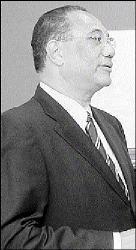
Trade Ambassador Dr. Richard Bernal, director general of the Caribbean Regional Negotiating Machinery, led negotiations for Cariforum on the new free trade agreement with the European Union. - File
Cariforum negotiators have secured a 'landmark' deal with the European Union (EU) that will see the writing of a new trade pact incorporating not only goods, but also services and investments, just in time to replace the interim Cotonou agreement which dies at midnight December 31.
"The Europeans made to us a services offer which is unprecedented," said Ambassador Richard Bernal, director general of the Caribbean Regional Negotiating Machinery (CRNM).
"They have never given such an offer to any group of countries."
The EU has also made concessions on the movement of workers - to grant market access for professionals in 29 sectors for employees of Caribbean firms with contractual service supplies (CSS) agreements.
These professionals, said Bernal, would be able to enter the EU to supply services once they secure a contract. But their movement is subject to conditions stipulated in the Services chapter of the new Economic Partnership Agreement (EPA), while their stay is limited to 90 days in a calendar year.
Liberalised sectors
The EU has also liberalised 11 sectors for temporary entry by independent professionals or self-employed persons, including, but not limited to, the providers of legal advisory services in respect of international public law and foreign law, computer, architectural and engineering services.
The EPA, says Bernal, also offers commercial opportunities for CARICOM and Dominican Republic industries, including the groundbreaking area of entertainment services.
Under the new trade pact, 25 of 27 EU member states will liberalise their entertainment sector, with some limitations on entry to be maintained by a few states, but generally allowing greater access by theatrical producers, song groups, bands and orchestras, authors, composers, sculptors, entertainers and other individual artistes, as well as attractions like the circus and amusement parks.
Experts say this level of access is unprecedented in Europe.
Controls
The EU offer is, however, subject to some controls, such as an economic needs test or qualification requirements, said Bernal, making the case for Cariforum states to push for registration and certification of their artistes and cultural practitioners in order to easily make their case for entry.
But in the interim, entertainers and artistes who are registered as businesses will be able to send their employees to almost all EU states.
Cariforum accepted the economic needs tests condition, said Bernal, in exchange for an open commitment from the EU for access without quotas or economic ceilings.
The market opening has been complemented with a 'historic and innovative' protocol on culture, which promotes deeper cooperation on all fronts, but with special provisions for audio-visuals.
In particular, Bernal said co-produced audio-visual products and services involving European and Caribbean creative teams will qualify as domestic productions and meet the audio-visual content rules in all EU states and in the Caribbean.
The development of 'co-production treaties' between individual EU and Caribbean states will also allow Caribbean audio-visual producers to access funding for creative projects.
Collaborating on projects
And, artistes and other cultural practitioners who are not involved in commercial activities in the EU will be able to enter the bloc to collaborate on projects and obtain training with stays allowed for 90 days in any 12-month period, said Bernal.
On the issue of investment, Bernal said the parties struck a deal which will see the Europeans liberalising almost all sectors to allow Cariforum firms to enter as foreign investors, with only a few excluded and with limitations in mainly the new EU member states.
As it relates to cross-border trade, Bernal said the European bloc has liberalised a majority of its sectors.
But the deal was not sealed without Cariforum having to reciprocate. Europe's accounting, auditing and bookkeeping services, architecture, engineering, computer and related services, hospital services, tourism and travel-related services, entertainment services and others now have easier access to the Caribbean market.
But Bernal said the agreement sees the EU liberalising 90 per cent of its service sectors, while Cariforum has opened up about 75 per cent for the developing Caribbean countries and 65 per cent for those classified as lesser developed countries or LDCs.
The EPA takes effect January 1, with a ministerial signature expected some time in April 2008.
dionne.rose@gleanerjm.com


















