Keith Collister, Business Writer
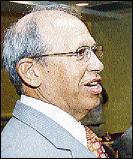
LEVY
Jamaica Broilers Group (JBG) on Tuesday, in a bid to calm market fears about its stock trading entanglement, said orders for the trades placed by seven executives occurred days ahead of problems with its ethanol supply contract.
The company's stock has fallen from its high of $5.30 in late September when it first issued a profit warning of an expected US$3 million (J$210 million) loss on its ethanol business to the current $4.04.
The loss, if realised, would have eliminated last year's second quarter profit of $140 million.
Broilers was cleared by the Jamaica Stock Exchange of any impropriety, agreeing with the company that the transactions were put in train before the blackout period imposed on executives.
Probe ongoing
But a probe of the trades by regulator Financial Services Commission is still ongoing, leaving some uncertainty in the market.
At Jamaica Broilers, key executives are offered packages that pay them 50 per cent in cash and 50 per cent in stock, creating an incentive to sell shares to realise their earnings.
Led by CEO Robert Levy, Broiler's presentation to investors, brokers and media Tuesday, ran through the timeline of events leading to its placement under the microscope.
JBG's first financial quarter ended on the July 13, 2007.
The blackout period for the quarter, during which the executives were unable to trade shares, ended on September 5.
Seven executives placed orders to sell shares between September 6 and September 21.
The trades were relatively small, rising up to a million stock units in one case.
The last trade by an executive had originally been placed with his broker on the 19th, but the final portion of the already partially completed trade was only executed on the 27th.
The company also said in an earlier press advertisement that its board discussed problems with its ethanol contract on September 26, and warned executives not to trade over the next few days.
Its profit warning notice to the JSE was not filed until the morning of September 28.
Broilers had originally projected yearly net earnings from ethanol alone of approximately US$4 million at last year's Mayberry investor briefing, or approximately US million per quarter.
This projection assumed ethanol sales of 40 million gallons of ethanol for the year, or two-thirds the plant's rated capacity of 60 million gallons, and a net operating margin of US 10 cents per gallon.
The very depressed level of recent ethanol prices, which had fallen to US$1.70 per gallon from over US$5.25 gallon in June of 2006, appears to have set off the chain of events leading to default on the fixed price September contract.
Broilers had nominated on September 4 a vessel to deliver the ethanol as per its fixed price contract. Delivery was agreed for the September 23.
Between September 17 and 19, Broilers was advised by its client Integra that the ultimate U.S. receiver of the ethanol had rejected the vessel.
But even after renominating a vessel on the 20th, and continuing discussions with Integra, the contract went into default on September 25.
Broilers turned to the open market to off-load the four million gallons of fuel grade ethanol produced by JB Ethanol Limited in September, which it sold at a loss of 50 cents per gallon or US$2 million on the September contract alone.
However, on October 4, the company negotiated compensation of US$1.45 million, reducing the anticipated loss by about 75 per cent.
Looking ahead
But looking ahead, JBG vice-president of finance and planning Ian Pasard advised that the company was now projecting its ethanol business would turn a profit for the three months of July, when production began, to September when its problems mushroomed.
The results will be booked in the second quarter ending October 13.
The plant was undamaged by Hurricane Dean, but the disruption of the logistics.


















