
Mcgregor
Many couples get engaged on Valentine's Day or during the Christmas holidays when the spirits of love and generosity are in the air. In most cases, the engagement ring that follows becomes the most treasured gift until the wedding day.
Unfortunately, 'the road to hell is paved with good intentions' and relationships sometimes go sour before the wedding bells chime. This is known to result in heated debates over property acquired during the relationship and the engagement ring, which symbolised the promise to marry, is often caught in the middle.
After many centuries of litigation, some countries have seen it fit to enact legislation to determine the fate of the engagement ring. Still, other countries, such as Jamaica, continue to rely on the common-law position that the engagement ring is a conditional gift. It is given on the condition that the marriage will occur within some reasonable period. If the marriage does occur, the condition is fulfilled, the contract is consummated and the ring becomes the absolute possession of the recipient.
Fault
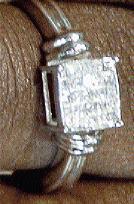
Diamond engagement ring - Ian Allen Staff/Photographer
If the engagement is broken, the decision as to who should keep the ring will depend on the reason for the break-up. Whose fault is it? If the break-up is the fault of the giver, the recipient should keep the ring and the converse is also true.
California has enacted a statute which is similar to the common-law provision. The engagement ring is treated as a conditional gift, so that the giver is entitled to keep it if the parties agree to go their separate ways, without attributing blame to each other.
Absolute gift
In England, the position is entirely different. The 1970 statute provides that the engagement ring is presumed to be an absolute gift. Regardless of the manner in which the break-up occurred, the recipient is therefore entitled to keep the ring. However, there is one catch. If the giver is able to prove that the ring was given on an express or implied condition that if the wedding did not take place it should be returned, the giver may succeed in getting it back.
As one gentleman discovered in the 2004 case of Cox v Jones, the recipient of the gift holds the handle in this situation. After the engagement ended, Jones applied to the court for the return of the engagement ring or repayment of its value. By the time of the hearing, Cox had used the diamond from the engagement ring to make a pendant, which eventually went 'missing'.
Jones discovered the hard way, after lengthy and costly litigation, that the presumption that the engagement ring is an absolute gift is a very difficult one to rebut. He was unable to satisfy the court that, at the time the ring was given to Cox, there was an understanding that it should be returned to him if the marriage did not occur. He lost the case.
As the cost of engagement rings escalate, it becomes more likely that we will soon have litigation of this type in Jamaica. Do we consider it an absolute gift or a conditional gift? Perhaps we will one day enact legislation to put the issue to rest.
Sherry-Ann McGregor isa partner and mediator with the firm Nunes, Scholefield, DeLeon s& Co. Send feedback and questions to: lawsofeve@ yahoo.com or Lifestyle@gleanerjm.com.

















