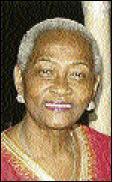
Clarke
Two prominent Jamaican Americans have taken strong positions against persons holding dual citizenship being members of the Jamaican Parliament.
Una Clarke, former New York councilwoman, and Professor David Rowe, prominent Florida-based attorney, both contend that taking the United States oath of citizenship is inconsistent with anyone seeking to hold elected office in Jamaica.
Mrs. Clarke, who served 10 years in the New York city council, wants other Jamaicans who have taken U.S. citizenship to make a distinction between rights and privileges associated with their nationality status.
"It is a privilege to maintain our dual citizenship and do certain things back home in Jamaica, but that does not give us a right to take a seat in the Jamaican Parliament," she said.
Principled position
It was for that reason, she said, that she had long taken a principled position against Jamaicans in the diaspora being allowed to vote in elections in the land of their birth.
In that regard, she argued that they should not be in a position to influence or dictate important policy decisions for their countrymen, who have to live with the consequence of those decisions.
Professor Rowe, reflecting on the implications of the U.S. Oath of Citizenship, said it had serious consequences for those taking it. While Jamaica continues to recog-nise the citizenship rights of its nationals who adopt a foreign nationality, the U.S. government makes no such allowance once you have taken that country's oath of citizenship, he pointed out.
"Once you have done this, you are saying that you are not a citizen in a foreign country and it is inconsistent for you to seek an office back in Jamaica that would be in breach of your U.S. oath of citizenship," he stressed.
The dual citizenship issue emerged in the lead-up to the September 3 general election, when the People's National Party (PNP) claimed several candidates for the Jamaica Labour Party (JLP) were not qualified to contest the election by virtue of the fact that they had taken citizenship in another (non-Commonwealth ) country.
Section 40 (2) of the Jamaican Constitution prohibits any such person from being elected to the House of Representatives or being appointed a senator. Where the person takes an oath of allegiance to a non-Commonwealth country after being elected or appointed to the legislature, Section 41 (1) of the Constitution requires that the person's seat be made vacant.
Two of the successful JLP candidates - Shahine Robinson of North East St. Ann and Daryl Vaz of West Portland - are among those being targeted by the PNP to have their seats declared vacant.
Allegiance and fidelity
Most of the JLP MPs being targeted are alleged to have acquired U.S. citizenship. The American Oath of Citizenship requires the person to renounce all "allegiance and fidelity" to his former country of citizenship and commit to the possibility of bearing arms against that or any other country on behalf of the United States.
The implications of these commitments are particularly worrying for Una Clarke.
"When Jamaica gets into conflict with the United States, which side would you take?" she asked.
Speaking along the same lines, Professor Rowe recalled two occasions during the Patterson administration when Jamaica and other Caribbean countries took strong positions in opposition to the American government. Prime Minister P.J. Patterson, he pointed out, was particularly strident in his rejection of the initial terms of the U.S. shiprider law, aimed at targeting drug traffickers in Caribbean waters and, later, the American position on the ouster of President Jean-Bertrand Aristide from Haiti.
In such circumstances, he said, no member of the Jamaican parliament or the Government should be in two minds about which side he or she should be loyal to. The position can only be clear if the person is fully committed to Jamaica, he insists.


















