
Ellen Campbell -Grizzle
It's back-to-school time. Our children study in shared and sometimes, cramped spaces. In such communal settings, the possibility of spreading contagious conditions or infestations increases.
Each parent plays a vital role in protecting the health of the school population. This is certainly so in the case of lice infestations. These tiny pests are known to spread more rapidly when our children are in school. Head lice most frequently affect children three to 10 years old. The most common symptom is itching in the areas where the lice are located.
The facts of Lice
Adult lice are tiny. They lay eggs that are glued to hair shafts, near the scalp. Nymphs hatch from the eggs and grow into mature adults. The eggs that remain, once the nymphs are hatched, are called 'nits'. This cycle is repeated every three weeks.
It is difficult to see head lice. However, use a light to examine your child's hair. If there is infestation, you will see those 'nits' stuck to the hair shaft. Sometimes, lice are found clustered around the edge of the hair near to the ears.
Lice cannot jump and fly from one person to another. They do not have wings. They are spread from person to person through contact with shared objects. For this reason, people should not share hairbrushes, combs, hats, towels or headpieces. If your child has lice, it is important to take the following steps:
Soak hairbrushes, combs and hair adornments in hot water for at least 10 minutes.
Wash sheets and towels in soapy, hot water and dry properly.
Vacuum carpet, cushions and upholstery on a regular basis.
Shake pillows and place in the sunshine daily for airing.
Use a lice comb to remove lice and nits.
Remember, there are some objects that your child may use that cannot be cleaned with hot water. These must be sealed in a plastic bag for at least two weeks to stop the lice cycle.
Treatment options
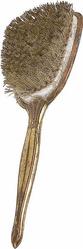
Soak hairbrushes, combs and hair adornments in hot water for at least 10 minutes.
It is important to prevent the spread of head lice. Some schools will ask that children do not attend classes if nits are present in their hair. Check your child's hair regularly throughout the school term. Regular hair washing is a good form of prevention.
If someone in the family has lice, all heads should be checked for active lice. If they are spotted on the scalp, treatment must be applied. Family pets do not need treatment, since lice require human blood to live.
Several over-the-counter and prescription products are available to treat lice. Most require two applications, with a gap of seven to 10 days in between. However, these medicines should not be used as preventative measures.
If your child is less than two years old and has lice, visit your doctor. Most medicines are not recommended for children younger than two years old. Let us go for a 'no nits' policy in our schools and homes.
Ellen Campbell-Grizzle, president, Caribbean Association of Pharmacists; director, Information & Research, National Council on Drug Abuse; email: yourhealth@gleanerjm.com.