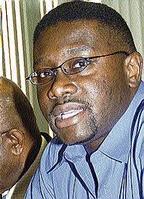
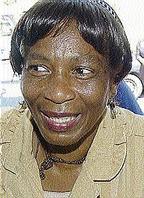
Dr. Myrton Smith, president of the Jamaica Medical Doctors' Association and Edith Allwood Anderson, president of the Nurses' Association of Jamaica.
On Tuesday, November 14, The Gleaner published an article in which the president of the Nurses Association of Jamaica (NAJ), Edith Allwood-Anderson, expressed concerns about the incidence of prescription errors. "The standard of prescription orders is insufficient and needs to be monitored," she said.
Mrs. Allwood-Anderson also claimed that one of the causes for the problem is the lack of appreciation of nursing expertise. "Nurses are not subservient to doctors within the medical framework. We compliment doctors for quality patient care," she said
Noel Julius, member of the Socio-Economic Welfare Committee of the NAJ, said doctors sometimes order wrong prescriptions for their patients, and the only reason lives are saved is because of alert nurses.
Below, we publish a response from the president of the Jamaica Medical Doctors' Association, Dr. Myrton Smith, on the issue of medical prescription errors.
The discussion of medical prescription errors and medical errors in general is not something to be embarked upon lightly. It needs to be discussed in such a manner as to highlight the fact that to err is human but that the sick and suffering can maintain a high level of confidence in their health care providers because of the many checks and balances involved and drug ordering, dispensing and administration.
It is for this reason that medical prescription, and other errors are continually discussed in developed and developing countries. The aim of the discussion must not be to belittle one group of health professionals while seeking to elevate the standing of another.
Drug administration chain
The chain of drug administration begins with a physician's assessment of a patient with a diagnosis established. After the diagnosis is made, a treatment plan is devised which includes an order for drugs to be administered with a view to improving the patient's condition. This order is made by the doctor in most cases, but in government health centres, the family nurse practitioner may write the prescription, but this is then checked and countersigned by the doctor. For the outpatient, the prescription is taken by the patient or his/her relative to the pharmacy where the pharmacist checks and triple-checks the order for dosage based on age and other demographic data. Where there is concern, the pharmacist will contact the prescribing physician and recommend necessary changes or obtain an explanation for the choice of drug or prescribed dosage. Where the physician cannot be contacted, the pharmacist may choose not to dispense the drugs. This clearly largely by-passes the nurses as they do not have to administer the drugs to these outpatients. There are more patients taking drugs out of hospital than there are patients who are given drugs in hospital by nurses.
For patients who are in hospital, the doctor writes a drug order on a treatment chart which is then sent by the nurse to the pharmacy where it is checked and triple-checked by the pharmacist, who then dispenses the drugs. The drug is then administered to the patient by the nurse. The diligent nurse will check the dosage of the prescribed drug against that which is recommended in the Nurses' Drug Guide or other Drug Formulary, prior to administration.
Checking the label
Nurses are also required to ensure that the drug that is being given is the drug that is intended by checking the label carefully. For inpatients, the pharmacist may be by-passed in the case of the administration of drugs which are "Stock Drugs". These are drugs which are kept in the drug cupboard or refrigerator on the ward under the stewardship of the nurse in charge. These are typically analgesics (painkillers, anti-fever drugs) including injectables, but may also include antiemetics (anti-vomiting drugs), antacids, antiepilleptics (anti-seizure drugs), antipsychotics, sedatives, insulin and anti-hypertensive drugs.
Occasionally, antibiotics might be in the stock cabinet, usually as surplus from previous orders. These stock drugs are necessary so that they can be available during emergencies.
Familiarity
Medical prescription errors here might be picked up by nurses who through experience, have gained familiarity with the drug or who have been diligent enough to check the drug formulary. However, this cannot be stated to be a routine occurrence. The identification and correction of errors at this point represents an example of the team approach to health care delivery.
Where it has been studied, the commonest causes of medical errors include: lack of knowledge of drugs and their effects; lack of information about the patient; illegible hand-writing; and, physician fatigue. One can add to that list, haste, either in emergency scenarios or in cases where there is overcrowding, resulting in reduced time for rigorous double-checking.
Several solutions have been advanced to reduce these errors. In some U.S. states, computerised physician order entry systems have been developed which allow doctors in hospitals to have access to drug data including indications, contraindications, dosages, side effects and drug interactions, all at the click of a button. That system also checks medical histories for allergies and possible drug interaction.
In less well-developed areas, there are books and/or pamphlets available to doctors to check this information prior to writing drug orders. It is helpful if the hospital management provides these, but in Jamaica, doctors generally have to have their own drug formularies.
We advise our members that prior to making drug orders, they check the data on drugs that they use infrequently and drugs to be given to children, which are often given based upon weight. They should also engage in continuing medical education as there is no substitute for knowledge. Drug orders made by medical interns are also double-checked by more senior doctors and some drug orders require the signature of a medical consultant and sometimes two consultants. These steps will reduce errors at the point of prescribing.
Another step that can be taken is to use computerised/electronic prescription systems to eliminate problems with ineligible handwriting. Contact numbers for doctors may also be attached to prescriptions so that the pharmacist may clear up any uncertainty. These steps can reduce errors at the point of dispensing of the drugs. At the point of administration, errors can be reduced if patients follow the pharmacists or the physician's instructions. They should also ensure that they do not place drugs in old bottles with a different label and they should not miss doses or double their dose without permission. They should also not share drugs with relatives or friends. If a nurse is administering the drug, he/she should double-check the order for appropriateness, dosage and frequency and should ensure that he/she administers the correct drug.
The point that needs to be made is that there are several checks and balances that are in place to ensure that drugs that are prescribed are safe for our patients. Dialogue is needed to improve the system particularly between the doctors and the pharmacists but overall the public should continue to exercise confidence in their treatment here in Jamaica.