In continuation of our special focus on the agricultural sector we present excerpts of the views of key agricultural stakeholders on the state of agricultural education in Jamaica.
DERMON SPENCE - PRINCIPAL, EBONY PARK HEART ACADEMY
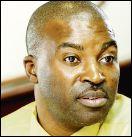
DERMON SPENCE
"The quality of agricultural education in this country is quite good, apart from certain aspects of research which we seem to be not so sure as to which direction we are going.
The fact is, while you have to produce in the field, a lot of the problems with agriculture and agricultural education is happening really at the policy level and I daresay that there is need for a serious concentration on that aspect of the education.
We can grow things and we can grow it well. We have some of the best things that are grown, (but) how do you really attack the situation in terms of policy is really where the issue is at. We have investments that are coming in but in terms of charting a course and making agriculture look attractive, public education has to continue and we need to provide incentive for our youngsters to see that the farmer of old is a long gone thing.
There are lots of technologies around - the green house technology, hydroponics and these things that will channel and excite their interest but we have to, as a government, as a people, really put our foot down in terms of public education and continue to build on the strengths of what I consider to be, if not, in the Caribbean the most illustrious industry that has blazed a trail across the Caribbean region. So there is need for real strengthening on policy issue, public education and government interest so that youngsters can see that there is really a way out and there are opportunities now. So it is a good time that we are having this discussion and I hope it will help."
DR. PAUL IVY - PRESIDENT, COLLEGE OF AGRICULTURE, SCIENCE
AND EDUCATION (CASE)
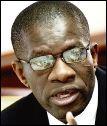
DR. PAUL IVY
"The important role that CASE plays must be matched by the resources that are made available to the institution to carry out its mandate and at present, having available adequate resources is decidingly not the case. As you know, that is an issue that needs attention and to be explored.
Agricultural policy in Jamaica and its formulation must include CASE and the other agricultural educational institutions at the point of formulation of the policy. What's going to happen to the graduates when they come out so that they can be encouraged and motivated to go into production agriculture and for them to have viable careers after they have invested in the training?
One of the points that has been made and something we have recognised, is that those persons who come to the agricultural education institutions, they really do have an interest outside of the high school scenario where they are warehoused in doing agriculture. If you find a person at Knockalva or Elim, Ebony Park or CASE, they do in fact want to do agriculture.
In fact, it might be interesting for you to know or probably surprising that every year we are oversubscribed in the number of applicants to agricultural programmes that we offer, but because of space constraint, we can't take all of them. I was so happy when Mr. Stanberry and I met in St. Lucia and he made the point that there has to now be a connection between the Ministries of Agriculture and Education. He has made overtures to the PS (permanent secretary) in (the Ministry of) Education regarding the role of CASE as an established policy framework and how it will operate within the whole framework of our agricultural policy and education which is formulated within the country."
ALBERT SHAND - EXECUTIVE DIRECTOR, RURAL AGRICULTURAL DEVELOPMENT
AUTHORITY (RADA)

ALBERT SHAND
"I believe that we have to determine the needs or at least our aims and objectives and then formulate our agricultural education programmes to satisfy these. I say that to say different sectors of the society (and) different age groups have different needs.
If we are going to turn out agricultural professionals as CASE does, then we have to address the issue from the early ages. A lot of us can recall the very active, vibrant, agricultural programme that we had in primary school some years ago, the whole school garden programme that was there and somehow the Ministry of Education had downplayed that. They have to go back and look at the agricultural programme in schools.
We at RADA (and the) Ministry of Agriculture have tried to do something towards this.
The whole agricultural scenario in Jamaica and in the Caribbean must be addressed by the institutions that we have. As I said, we tend to be turning out people who are trained in the sciences rather than turning out people who can more or less assist or who are prepared to assist with the development of agriculture as it relates to the Caribbean.
If we look at the matter of the farmers themselves, we as an institution are supposed to be transferring knowledge to them and it is critical that we gear our training programme to really develop agricultural product professionals from the farmer's level as business people rather than just addressing the industry, crops and livestock production, but rather making a complete person of a farmer so they can move forward with farming as a business that is comparable to manufacturing medicine."
DONOVAN STANBERRY - PERMANENT SECRETARY, MINISTRY OF AGRICULTURE
AND LANDS
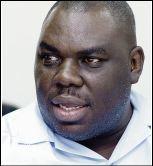
DONOVAN STANBERRY
"One of the first things that I did was to sit with the FAO within days to get their commitment for some support in terms of putting together a comprehensive agriculture and rural development policy.
We have bits and pieces here and there but we want something which is cohesive, with the linkages, with all the various things, the education, the tourism, manufacturing and so on.
I don't know that by policy any government can force any particular school to teach agriculture, but I think what we need to do is to be able to have some kind of a demonstration effect because nothing succeeds like success and if we can demonstrate that agriculture is something that is worthwhile then probably people will start changing their perspective on agriculture.
We are going to promulgate a comprehensive agricultural policy that is going to be consultative and we will put out once and for all in one document what is our agricultural policy.
Education without empowerment doesn't avail much, never before have we had so many people with certification in this country and I go back and say that the system cannot absorb so many people if people want to work for people.
I think a little innovation and a little collaboration can go a far way in terms of assisting. For instance, all the research stations owned by the Ministry of Agriculture must now become available to CASE, where your students can come - whether it is cattle breeding or plant genetics - that must now be made available.
Other programmes, some of which are funded by loans and grants, like the EU Programme, the Agricultural Support Services Project, must be strategically used, because there is a symbiotic relationship, so you are using one stone to kill many birds. I think that there is a way that more can be available if we use the little that we have in an optimal way in terms of partnership."