- FILE
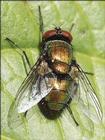
Screw worm fly.Leonardo Blair, Staff Reporter
DR. HEADLEY Edwards, director of the National Screw Worm Eradication Programme and the Veterinary Services Division in the Ministry of Agriculture since 2002, explains that while the delay and attendant costs of the programme give cause for concern, the problem is not as bad as it seems. He points to reports that screw worm cases have gone down - not by much he believes - but the problem is not as "massive" as it was, based on a 1981 study.
But Auditor-General Adrian Strachan is not so sure about Dr. Edwards' report. He has raised serious bookkeeping concerns about the integrity of the programme's claims and statistics.
In his March 2005 report, Strachan explained that an audit of the programme disclosed that several extensions of the 2001 completion date had been granted and the project's cost had ballooned from the initial estimated $324 million to $1 billion at the end of March 2005, and the worms are still here.
Subsequent figures acquired by The Sunday Gleaner indicate that the cost is now approximately $1.3 billion.
Strachan explained that while reports on the project indicate that there was a reduction in the number of screw worm cases during the course of the programme, explanations given as to how the number of cases was determined were not considered satisfactory. Documentary evidence to support the findings was also not presented for audit scrutiny and information on the prevalence of cases at the start of the project was not available. "In the absence of baseline data and clear means of measuring accomplishments through a reliable methodology, the reports and conclusions of the progress of the project were open to question," said Strachan in his report.
Last week, when quizzed about the concerns raised by Strachan, Dr. Edwards appeared illusive and constantly referred to dated screw worm research. He said the frequent floods and hurricanes in 2004 and 2005 had set back the project and stray dogs which become infested with screw worms were making eradication difficult. He didn't say what had happened in the years prior to 2004. He, however, said that he "hoped" for eradication by the end of the financial year in April 2007.
But local veterinarians have dismissed that hope with much scepticism."When I see it, I'll believe it. He may have some data that I don't know about to give him that confidence. I see screw worm cases at least two to three times a week," says Dr. John Josephs - with more than 17 years of practice - of Noah's Ark Veterinary Centre. "I know they are trying, but it is frankly not effective enough," he says. "There are various reasons that have been put forward as to why it is not working but what I do know is that we are still seeing a lot of screw worm cases, not as much as say 10, 15 years ago but still a lot."
'MASSIVE EMBARRASSMENT'
"This is what they have been hoping for every year," says Dr. Paul Cadogan, public relations officer for the Jamaica Veterinary Medical Association. "This thing is a massive embarrassment as to how it has gone and how it has been responded to. One or two field officers in each parish cannot work. Travel for officers has been restricted to 1,000 kilometres per month. The officers don't get paid for any work beyond that; it's at their own risk," he says.
Local veterinarians not only agree that the nation is facing a waste of scarce public funds and a major public health concern, but say it would be a major blow to the domestic scientific community if Jamaica became the first country in the world to fail to eradicate screw worms using the sterile insect technique.
In this technique, pupae (insects at the immobile non-feeding stage of development) are imported from Mexico and bred in laboratories to be developed into flies. These flies are then made sterile and released into the air to mate with other female flies.
Descriptions of technique and how this results in eradication is incomplete but there have long been complaints from the local veterinarian community that something has been going awry with the technique - mostly with the costly sterile flies which, according to Dr. Edwards, accounts for a significant portion of the programme's budget.
Dr. Cadogan explained that it was only last year, on the advice of an international screw worm expert, that local authorities learnt that there was a problem with the strain of sterile flies the country had been purchasing from Mexico. The local flies were rejecting them as suitable mates because they were too small.
HONEST SCIENTIFIC ANALYSIS
"I think honest scientific analysis is needed. Put the factors down and see what has happened. I think what has happened in Jamaica could be instructive to the rest of the world. The thing is we started it and we have got to finish it. It would be a major blot to the scientific community in Jamaica to write it off as a failure," says Dr. Sarah Eytle of the Phoenix Veterinary Clinic who has more than 20 years of experience in the field and
collects screw worm samples for the national project.
Last year alone, Dr. Eytle treated some 145 cases of screw worm in her clinic and since the start of the year, she has already treated 42. Dr. Eytle explained that even though eradicating screw worms from Jamaica would seriously affect her profit margin, she is willing to forgo the profits in the nation's interest. "Before the programme was launched, we had done a computation of revenue and just taking out the charge of cleaning the maggot wound alone it was about 15 per cent of our income.
We recognise that, but we think it is necessary to eradicate the screw worm. It is a national concern. It is a concern to the veterinary community."
ADMINISTRATIVE PROBLEMS
President of the Jamaica Veterinary Medical Association, Dr. Graham Brown, says the programme has been riddled with administrative problems and even with the hurricanes, floods and stray dogs, the programme could have done better.
"I think in the past, the screw worm programme was on autopilot. The ministry supported the programme without actually trying to control it," says Brown. "When the programme first came on stream, many of us remembered an American consultant they hired, Dr. Snow. We vets wanted to find out how they were going to do it and he said something to the effect that we were only invited to the discussions as a courtesy."
Dr. Graham explained that the consultant said the release of sterile flies across the island would take care of the eradication problem. Nobody said anything about the stray dogs who frequently get into fights, get cuts and become ideal carriers for the parasites.He pointed out too that the programme also operates an incentive programme where Government veterinarians receive additional payment calculated as a percentage of their salary for working with the screw worm programme as long as the programme is running. He disagrees with the system of payment.
OVERSIGHT NEEDED
"We want vets to get money but we feel it should be done based on the performance of the programme. The longer this programme lasts, the better this is for some vets," he said. The incentive programme should be one where vets receive this money when targets are met," he explained. There are currently 70 registered veterinarians across the island. Fifty of them are active and nine of them work with the Government.
He said there was a need in the ministry for somebody whose sole function is to oversee the eradi-cation programme. Right now, says Dr. Graham, "it's like a hydra with many heads. You don't know who is responsible."
"There have been other problems too," he said. "There was a time," he explains, "when it is was reported that for years, the shoot mechanism used to distribute the sterile flies from the aeroplanes across the island was killing the flies during the release and the authorities did not know. At one point the project ran out of money too.
"Right now, the reporting (of cases) is minimal. The numbers coming out of the Veterinary Services Division does not truly reflect what is happening out there," reports Graham. "Nobody wants to pull the plug because the moment you pull the plug there will be another question to answer: 'Where did all the money go?' If you pull the plug too, in two months we will be back to square one. The screw worm programme has had an effect but in this programme there is no 90 per cent success. It has to be 100," said Dr. Graham.