John Myers Jr., Agriculture Coordinator



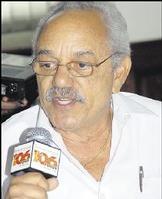
Top Left: Ming: It has been very difficult for our members to access quite a number of these loans that are available.
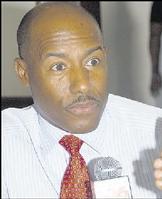
Top Right: Cocking:Banks are very interested and excited about projects that make sense and that are structured right.
Bottm Left: Fontaine: I would like to see where the financial institutions pay more attention to finding innovative ways of financing agriculture.
Bottom Right: Hill: Make it (agriculture) a business that is attractive for the bank to finance and it will be financed.
As a part of our focus on agriculture, today we continue the
series with a look at the issues relating to financing the sector.
STAKEHOLDERS IN the local agricultural sector say while there is no shortage of funding, stringent stipulations by financial institutions are preventing accessibility to loans for improving and expanding production.
"As far as the agro-processors are concerned, there was never a shortage of funds. The only problem is funds at what interest rate," Michael Ming, first vice-president of the Agro Processors Association told a Gleaner Editors' Forum recently.
He explained that "It has been very difficult for our members to access quite a number of these loans that are available." Ideally, he said, they would require loans at a five per cent interest rate, significantly below the interest rates currently being offered.
RISK-TAKING NEEDED
Senator Norman Grant, president of the Jamaica Agricultural Society, agreed with Mr. Ming. According to him, "Our bankers in Jamaica are not bankers. I see bankers as persons that take serious risks."
Senator Grant lamented that despite repeated calls from the JAS and the Jamaica Manufacturers' Association to reduce interest rates in line with the reduction in the bank reserve requirement, which has been reduced from 24 per cent to about 11 per cent, interest rates remain unacceptably high. He argued that while interest rates have been reduced, it has not been consistent with the reduction in the bank reserve requirement.
"It's (the bank reserve requirement) a reduction of more than 50 per cent, but you have not seen that corresponding movement in the interest rates," he said. "It's one thing to make the money available, but if you can't access it, it doesn't make sense," he added.
NO PROBLEM FOR POULTRY INDUSTRY
Mr. Ming said the recent hurricanes have placed many of the association's members in a precarious financial position. "Unfortunately, quite a number of us have not been able to service these loans appropriately ... so most of our members we now find ourselves in some serious financial difficulties just to keep our heads above water," he said.
Dr. Keith Amiel, president of the Caribbean Agri Business Association, said the problem of finding suitable financing has not been an issue for those involved in the poultry and pig industries, largely due to the success of these areas. However, he noted that "Jamaicans have the capacity to produce once they are given the right equipment and once we are given the right financing."
Richard Fontaine, president of Fraser Fontaine and Kong Insurance Brokers and coffee farmer, expressed concern that the financial institutions were not providing enough support even in areas of agriculture that are doing well. "The main problem with the coffee industry is that we haven't got the financial facilities to continue with the product that we have that is supposed to be gold, our black gold in Jamaica," he said.
"I would like to see where the financial institutions pay more attention to finding innovative ways of financing coffee or agriculture in general," he said further.
FIVE PER CENT NOT FEASIBLE
In responding to the sug-gestion of providing loans at five per cent interest, Andrew Cocking, deputy president of the Capital and Credit Financial Group, explained that it was impossible to offer loans at five per cent as merchant banks access funds for lending through the Export-Import Bank and the Development Bank of Jamaica, which lend at interest rates that would make it feasible.
Ashton Hewitt, manager for agri-services at the Bank of Nova Scotia, said it was difficult too for commercial banks to offer loans at five per cent.
"I know we have gone very low, but that was a situation where we had disaster and we made funding available to the Development Bank for on-lending," he explained.
Aubyn Hill, chairman of the National Investment Bank of Jamaica advised that one way for farmers to attract suitable financing for agricul-ture is to "make it a business that is attractive for the bank to finance and it will be financed."
Mr. Cocking said the banks were "very interested and excited about projects that make sense and that are structured right."