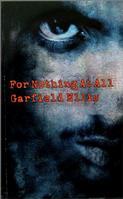
For Nothing at All
Author: Garfield Ellis
Publisher: Macmillan Caribbean
Reviewer: Barbara Nelson
I HAD recently read an excerpt of For Nothing At All, Garfield Ellis' second novel for Macmillan Caribbean Writers, in the Jamaica Journal Vol. 29 Nos. 1-2 June
to October 2005. I thought it
was brilliant!
Having now read the whole novel I agree with the publishers that Ellis is indeed a gifted writer. His first novel for MCW is Such as I have (2003).
The Macmillan Caribbean Writers Series (MCW) is an exciting new collection of fine writing which treats the broad range of the Caribbean experience. The series offers a varied selection of novels and short stories, and also embraces works of non-fiction, poetry anthologies and collections of plays particularly suitable for arts and drama festivals.
Ellis, in telling this deeply moving, tragic story presents two themes. One theme is light, happy, nostalgic and amusing while the other is dark, frightening and terrible. The story deals with young, carefree schoolboys from White Marl All-Age School who grow up from the innocence of childhood to become young men whose lives are cruelly shaped and terribly manipulated by poverty, crime and political violence.
Ellis takes us from Chapter 1 when Wesley, the narrator of the tale becomes the only boy at the school to ever "dust" big, fast Red Head. Wesley was the bright one in the group of Stevie, Spragga, Patrick, Andrew, Colin and himself.
On the day he "dusted" Red Head Wesley and the other boys "sculled" school and spent a day of fun and excitement eating sugar cane, fishing, escaping a cane fire and losing their clothes to Breezy, the ranger.
STRIPES
This carefree, sunlit day forms the backdrop to the Chapters: The night Stevie died; How Skin got his stripes; Colin's time; How I became a wanted man; The Why of it. In those five chapters the author describes how the friends grew apart, each person becoming a victim of circumstances that lead in most cases to corruption, death and madness.
Ellis is a master of word pictures and brings a deep emotional understanding to his work. At the funeral of one of their friends a conversation between Wesley and Colin goes like this: ÒPeople like we don't turn nothing. People like we just dead so."
SAD
Wesley continues to explain that at the funeral: "We weren't crying or anything. We were just sad. There were tears, but not long ones that ran down your face in streams to your chest. Just short stumpy ones that rolled out and dripped down to your chin from time to time."
Ellis describes a scene where Colin got in the spirit and began to dance at a Pentecostal meeting. He writes: "He pivoted and stepped with feet as light as those kids in the dance class at school. He pivoted, stepped high, dipped and twisted his way back and forth down the aisle. He shouted and praised the Lord in a high plaintive voice."
Wesley the narrator describes the effect that the charismatic Michael Manley had on him and his adolescent friends. He remembers Òhow he (Manley) stood and spoke. And how every word was like pure, beautiful, soft milk." Wesley believed that "Manley had come to save me, though I was not sure what he was saving me from. But if he had asked us then, any of us, to leave school and follow him to hell we would have done it."
But the innocence of youth was quickly eroded and awful experiences in the neighbouring communities began to shape the character of the young men in the area. One of these was Danny Bruk Foot. Wesley noted with dread: "The dead flat of his eyes and the coldness in them was something that only the experience of having power over life and death could produce. In his eyes you could see that he had killed before and that he believed he had the power to do it at his will."
HELPLESS
In another disturbing experience Wesley was forced to watch a group of young men steal sand at Elshire. He recalled that he "could almost hear the pristine surface (of the beach) sigh as the large bucket sank into it." He watched the large caterpillar scoop up the sand and he "stood helplessly as the large tractor ravaged the beach, plunging its bucket again and again into the sand."
Wesley honestly believed that if he stayed out of trouble, one day he would make it out of the confines of White Marl. With this thought in mind he studied diligently and made many sacrifices. But after he left school he saw the boys who had turned to criminality become rich and powerful while his own life languished. His anger builds up.
The ending is poignant and gut-wrenching. Wesley realises that only Colin has found "something" to hope for, hold on to and steady himself in his god.
In his pain, anguish and dismay he can only ask why? Why although the game has not been finished Òwe have been wasted, vanquished and spent for nothing at all."
An excellent story, beautifully written.


















