Howard Moo Young, Contributor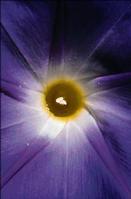
Morning Glory. – Howard Moo Young Photo
IN SEPTEMBER, 1999, when I presented my first solo exhibition 'Digital Expressions' at Red Bones Café, I used the computer as my digital darkroom to create several images from my original photographs taken with both 35mm colour transparencies and colour negatives. All the pictures were scanned, and the computer was used to manipulate and create new abstractions for the final show.
Modern art has been a significant means of expression. However, unlike classical types of art that were primarily intended either to capture the likeness, or to present an artist's interpretation of a subject, the objectives of 20th century art were more difficult to define.
From the late 1960s through the mid-80s, artists used a variety of techniques to create their pieces of modern art. A blank canvas, a single circle, splattered paint and a host of effects were used as creative tools. Basically, they were just abstract design elements, so the style became known as abstract art. Sometimes it worked, other times it didn't.
ABSTRACTIONS
But there's a different type of art that works very well in photography, and that's the concept of abstractions. Abstractions are simply portions of larger scenes that have been isolated and either reduced or blown up to the type of individual design elements used in abstract art. What makes sense in the broader composition may not make sense in an abstraction. At the same time, what may be a minor element in the larger composition becomes the main subject.
This is why I admire the paintings of George Rodney, one of Jamaica's most talented artists, a master of anatomy, as well as creator of abstract masterpieces using minimal subject matter. His choice of colours is excellent and his compositions are superb.
Various types of abstractions exist. For example, they can be minimalist, consisting only of lines, colours and shapes; illustrative, resembling drawings or paintings; or photo-realistic, where subjects are still recognisable, but the subject loses its importance. Abstractions are very subjective forms of creative expression. Different photographers may interpret the same subject in a variety of ways. Still, there are some simple guidelines that can improve your potential for success.
DESIGN AND TECHNIQUE
Simple abstractions tend to work best. A curve, line, shadow, or two fields of colours can be transformed into powerful minimalist abstractions. Design elements like repetitive patterns and geometric shapes within a larger image can result in interesting compositions. Contrasting colours in colour photography or intense blacks and stark whites in black-and-white can be very effective.
Technique, and not technology is the secret to creating abstractions, start by taking excellent photographs. Digital imaging is an ideal medium for creating abstractions, as they can be created by the camera or by the computer. When created in the camera, abstractions are a form of close-up photography, whether you used a zoom lens at long maximum focal length, or a macro lens. With abstractions, the subjects become secondary, while their colours, shapes and positioning are the primary considerations. The final image requires some visual exploration.
CHOICE OF FILM OR DIGITAL
When shooting with film, one tends to be more selective. Frame the same subject several different ways, vertically and horizontally, or very tightly and then zoom out a little. Spend some time studying individual compositions before blowing through a roll of film, I still try to make every frame count on its own.
With digital, your approach can be a little different. One of the great things about digital photography is that you see the image that you've just taken right away and you can erase or keep the images you want. There's no need to worry about running out of film, but I believe that photographers could get lazy and stop concentrating on things like composition, details, backgrounds, and lighting.
The excuse being that the computer can take care of all of these factors, but why take a bad picture in the first place? Unless the main subject is so great with lots of impact, and you just cannot change the background or the colour at the time of taking the image. I'm glad that I was taught to make every photograph count, and having gone through the route of 35mm colour slides, all my exposures had to be right on the button.
EXPERIMENT
Some of the most interesting effects can be achieved with a computer. It's possible to take an average photo, crop it creatively, apply certain adjustments, and arrive at a unique abstraction. Simply select a certain section of the larger image, copy it, and make a new image out of it.
You can also enlarge the image several times its original size and find the right composition hidden within the original photo. Similarly, a creatively cropped leaf can be turned into a powerful composition by such things as changing the hue, saturation and lightness of the cropped image.
Breaking the rules on abstractions can sometimes result in the most fascinating images. Once cropped, modified and optimised, abstractions can be enlarged to create interesting display prints, to draw the viewer in closer to study the composition. In either case, abstractions create more interest than "straight" photographs every time.
Howard Moo Young is an Advertising/Graphic Design/Photography Consultant with over 40 years experience. Email: howardmooyoung@getcaughtmedia.com