Krissah Williams, Contributor
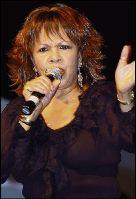
Candi Staton in performance at Gospelfest's 'It Soon Be Done', held at Cinema Two, Dominica Drive, New Kingston last month. - WINSTON SILL/FREELANCE PHOTOGRAPHER
THE WASHINGTON POST:
MONICA MILLER, general sales manager of Radio One Inc.'s gospel station in Atlanta, remembers how hard it used to be to sell advertising for 97.5 Praise FM. Three years ago, few groups except churches were willing to buy time even though the station was the fifth most popular spot on the FM dial in the market.
"It was frustrating," said Miller, who watched advertisers in search of black consumers flock to urban media while ignoring gospel.
But these days, Miller said, corporate America has set its sights on the black Christian market. Her station's revenue grew 35 per cent last year, and about 90 per cent of the station's advertisers are now supermarkets, apparel retailers, automotive manufacturers and other large companies.
Major corporations have long marketed to large demographic groups including women, Latinos, blacks and youth. But as companies search for new ways to slice the demographics, black Christians -- and their middle-class money, their education and their families -- have attracted increasing attention.
The buying power of the nation's 36 million blacks has risen substantially in recent years, from US$318 billion in 1990 to US$585 billion in 2000 and to US$723 billion in 2004, according to the University of Georgia's Selig Center for Economic Growth.
TARGET AUDIENCE
For years, advertisers targeted this market through ads in magazines like Ebony, Jet and Essence. More recently they looked to media focused on urban music and entertainment. But those advertisers began worrying that some of their target audience were not being reached and focused on black Christians.
Deborah Gray Young, a vice-president at the E. Morris Communications Inc. a Chicago ad agency, conducted focus groups of black consumers for Tyson's Food Inc. and found that the social activities of many black women centred on their churches.
An estimated 53 per cent of blacks regularly attend church, according to a 2002 study by religion research firm Barna Group Ltd., a percentage point higher than that of the nation overall. Only about 15 per cent of blacks tune in to gospel stations, according to the research firm Arbitron Inc. But among those listeners, more than 70 per cent own their own homes and 17 per cent have household income of more than US$75,000, according to Interep National Radio Sales Inc., a radio marketing firm.
STAY NEUTRAL
"There's been a growing interest in this faith-based market from mainstream corporate America. Initially there was a lot of hesitation due to the religious nature of it," said Max Siegel, president of Sony's Zomba Gospel, a major gospel music label. "A lot of companies liked to stay neutral, and no one could say exactly what the benefit would be. But the federal Government has made faith-based initiatives acceptable."
Gospel music sales prove that "the consumers are loyal, and they have a lot of disposable income," Siegel added.
African American gospel music stars sold about US$140 million worth of CDs last year. The latest CD by platinum gospel artist Kirk Franklin, whose music weaves together R&B, hip-hop, pop and gospel, sold more than 150,000 copies in three weeks last month.
More gospel radio stations are appearing. Radio One, in Lanham, Md., the nation's largest urban radio network, has programmed about a dozen of its 67 radio stations with gospel music in the past five years. Nationwide there are nearly 300 black gospel radio stations, compared with 80 a decade ago.
LA Times - Washington Post