By Glenda Anderson, Staff Reporter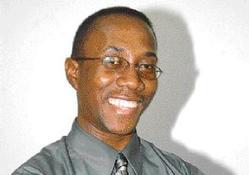
DAVID COOMBS, the 33-year-old chief executive officer of the Princess Margaret Hospital in Morant Bay, St. Thomas, is all about defying the odds and living life with much more than a dollop of zest.
The soft-spoken, but gutsy, Coombs refuses to be conquered by his medical condition sickle cell disease and, while maintaining a healthy balanced lifestyle, rarely refuses an adventure.
"I respect it (sickle cell), I've come to understand it a little better, but I do not fear it. The thing is I don't allow it to define me," he says.
Well known as a karate enthusiast (he has a yellow stripe and trains three days a week), he also does weight lifting and aerobics, and smiles at the memory of being airlifted down from the Blue Mountains.
"It was the lack of oxygen that did me in," he leans forward to point out.
Coombs was diagnosed with the disease at three years old, (both parents had the sickle cell trait) and missed out on the rough and tumble of early boyhood.
"My mom was very protective, maybe too protective. I was constantly being told that I couldn't do some things, that I couldn't play like other children."
Painful crises during his
adolescent years meant intermittent backaches, and pain in the joints which usually took on average seven to nine days to resolve.
Then there was having to keep up with school and other activities. His high school (Jamaica College) attendance record was spotty, pushing his mother to eventually quit her job to look after him full-time.
"I repeated fifth form because of it (I tried doing my examinations under medication but that just didn't work out), then I went on to do my A' levels at Exed Community College. My final year at university was particularly rough. That year I had my thesis to be done, and I remember
getting up in pain and writing the final two chapters."
Coombs graduated in 1998 from the University of the West Indies with a first degree in history. Several part and fulltime jobs followed, including working the switchboard at the Health Facilities Maintenance Unit, before he moved on to his present position as CEO.
PACE YOURSELF
"It's the monitoring and
management of what you do," he says. "You have to pace yourself, know what you can and cannot do and (at other times) see some things as just challenges to be conquered.
"Once you get to know your body you know the things to stay away from. The last major thing was the removal of my bladder. I was going through a painful crisis and couldn't keep anything down. I didn't eat for a month. After the surgery, which lasted between three and five hours, even my eye lashes hurt, but God helped me."
Coombs rejoices in his health and says his inspiration came from family, especially his mother Mary and sister Yvonne and friends like Kevin Davis.
Colleagues, like his former boss, Claudius Ramsay, regional manager of the South East Regional Health Authority (SERHA), applaud his strength.
"He took ill a couple of times and at one time when I looked at him, his eyes were completely yellow, and I thought he was going to be out, but he bounced back. If you met him, you would have no idea (of his medical condition. His deportment is normal, he speaks well, and writes well. He's a very organised and competent worker, he's very intelligent, highly qualified at what he does, very straightforward and very thorough," says Ramsay.
Coombs has strong words for persons who discriminate against and stereotype sicklers (people with sickle cell).
"For those persons in the health system who treat sicklers, I ask them to remain human. Not all of us are addicts, we're not faking pain to get a high. I know there are persons out there who do that but as a person living with the condition, it's not nice the treatment meted out to you in the public health system. There have been cases of persons in painful crises and a nurse commented, 'Oh these sicklers, that's how they all behave, they just want a fix'.
STEREOTYPE
He explains that the stereotype (drug addicts) could possibly be as a result of the intensity of the treatment.
"The painkillers given to us could knock the average person out cold. The general (crises) treatment varies. Varying combinations work for different persons, some will have one drug, while others need a combination. I know for me, for example, Morphine (drug) has absolutely no effect.
He has heard the myths, but unless there is some scientific base, he has one word for them.
"Rubbish! If you allow it, it can destroy you because if you hear something long enough you'll believe it, but you can either make it you or dismiss it."
NEXT WEEK: Peter and Andrea Douglas talk about the shock of learning that their newborn daughter had a potentially fatal and life-long disease.
PLUS: Finding your match genetically. Why it's important to check out your partner's gene pool.
Note: Sickle Cell Awareness Week was September 26 through October 2