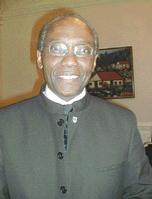
Deon P. Green, Gleaner Writer
LONDON, England:
HE WAS among those who was left in Jamaica in 1948 when his mother migrated to England. He was brought up by his aunt until age 15 when his mother sent a ticket for him.
He left Jamaica in 1955 to join his mother, and he immediately began school.
Geoff Palmer, now a university professor, has climbed the 'ladder of success' after several challenges, especially in the racist environment of that era in English history.
"At Shelton Road Secondary in the middle of London, there weren't even black people on the streets much more in the school, in my school I was the only black kid."
Asked how people reacted to him then. He said, "Some reacted with curiosity, as if I was some sort of black monkey; they were curious, it was a time of racism, there were times when my mother and I were coming up a particular road we were stopped, we were not allowed to walk up that particular road and we had to walk around the long way to get home just because we were black."
However, in the late 1950s, things began to change.
LOVE FOR CRICKET
After leaving local school Palmer's love for cricket opened doors for him. "I should have left school at an early age but I was very good at cricket and based on my cricket I got a scholarship and was transferred to a grammar school." Having left grammar school, the young Palmer was unable to find work. He sought the library as a place of refuge and one that would keep him warm whenever it was cold.
At the library he read widely and saw an advertisement for a job at London University as a technician. He applied for the job and got it.
"That was the changing of my life as it was at London University in 1957 that Professor Chatman decided to improve my education, he just said, 'I don't think you are a stupid boy' and by 1961 he got me into Lester University."
At university, Professor Palmer obtained a bachelor's degree in botany, and returned to London but was unable to find a job.
"With a botany degree as a black person in London in 1964, there was no way I could get a job, so I had to go to work in a restaurant peeling potatoes; I had an honours degree but I was peeling potatoes in London," he chuckled.
"Fortunately I saw an advertisement for a doctorate in Edinburgh, applied for it and got it," he said.
Palmer did a PhD in Edinburgh between 1964 and 1968, after which he went and worked with the Brewers Research Institute and became a senior scientist. He said that in 1977 he went to the Heriot-Watt University in Scotland as a lecturer where he has remained since.
SCIENTIFIC DISCOVERY
Professor Palmer has made an international impact in the brewing industry with a major discovery. He told The Sunday Gleaner that he built a reputation between 1968 and 1977 working on grains.
"In Africa there are many breweries and African students were being trained in Edinburgh in brewing; I was responsible for them, so I began getting invitations to go to Africa to assist in the brewing industry." His capabilities took him to Kenya, Nigeria, Zimbabwe and South Africa, Ghana and all over Africa teaching students the art of brewing. He said the African states found it was cheaper for him to come and teach 20 students than for 20 students to go to Edinburgh.
During his research period at the Research Institute in Scotland where he worked on barley, he made a scientific discovery which earned him worldwide recognition.
He explained: "With barley, it is made into malt which is used in the making of whiskey, milkshakes, beers, ovaltine, Milo, bread and others products. With my expertise in barley, my job was to make malt most efficiently; so in 1970 I developed a process where you could make malt in five days instead of nine days which was the norm in those days."
The professor said the method was adapted by the British brewing industry, which has been very responsive to his work. He noted that even the American brewing industry has recognised his work by giving him distinguish research awards for his discovery. Other awards copped by the professor include a MBA from the British monarch.
Asked what was his greatest concern, he responded:
"The sad thing that bothers me is that when I retire next year, there will not be another senior professor in that university who is black."
He said there is the need for a greater awareness among black nationals of what they want to be at the top. He pointed out that everyone cannot work for the council, in the media, race relations or become athletes. "I think what we need is a distribution of black people in institutions, all of them."
What message does he have for aspiring young black people? "I think we have an idea that it is cool to do certain things, and it is not cool to do some things, but if we (black people) want to be heard we have got to think it is cool to be a dentist, to be a professor or a lecturer at a university and it is cool to achieve higher levels. I would say develop an interest and pursue it, if you need it go out and find it; people are out there to help you; until you have tried and failed don't say it is not possible."