By Monique Hepburn, Staff Reporter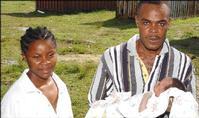
Elie Brezeau, 28, and his common-law wife, 19-year-old Vedel Niclas with their 19-day-old baby Woodson Brezeau at the Montpelier camp in St. James. Both are Haitian refugees seeking asylum in Jamaica. - Patrick Campbell/Staff Photographer
WESTERN BUREAU:
WOODSON BREZEAU, just under three weeks old, the first baby born to Haitian refugees at the Montpelier camp, in St. James, symbolises the hope his parents are now seeking in Jamaica.
Elie Brezeau, a 28-year-old truck driver from Ransed-hainault, Haiti, and his 19-year-old girlfriend, Vedel Niclas, disembarked a rickety vessel that landed on Jamaican shores on February 19. The couple had left for Jamaica as the political conditions in Haiti worsened following the ouster of president Jean-Bertrand Aristide.
Despite being six months pregnant at the time, Vedel saw fleeing Haiti as the one sure way of ensuring that her unborn child was delivered into a safe world. Those were desperate times and she felt the need to take the risk.
When The Sunday Gleaner's news team visited the Mont-pelier camp on Wednesday, the couple willingly displayed their bundle of joy so that the photographer could take snapshots through the perimeter fence to the compound.
With the help of a translator, Mr. Brezeau told The Sunday Gleaner he was not only happy his baby was in good health but that he was also a Jamaican.
FEARED FOR HIS LIFE
In explaining his motivation for fleeing his homeland, Mr. Brezeau said the situation had reached crisis levels and he was becoming increasingly fearful for his life and that of his unborn child. He said that prompted him to take to the sea with Vedel.
"I knew I had to leave and that I could not leave my pregnant girlfriend behind," Mr. Brezeau said. "I knew if I took her here, she would be able to deliver the baby in a safe surrounding."
However, while the birth of his son is a cause for celebration, Mr. Brezeau, who said he worked in Haiti as a truck driver, complained that life at the Montpelier camp was comparable to living under prison conditions. He said it was his desire to find work to support his family but is constrained by his circumstances.
"The camp is like a prison," Mr. Brezeau complained. "I want to support the baby but I cannot go out to work, which is not my wish. I want to go out and work."
DONE THREE INTERVIEWS
In a bid to fulfil his ambition to stay in Jamaica and work, Mr. Brezeau said he has done three interviews with Immigration officials and was wondering if he would be allowed to remain in Jamaican with his Jamaican son. For him, returning to Haiti was a last resort.
"I don't want to go back," Mr. Brezeau said flatly. "I want Haiti to change, the war must end."
When contacted on Wednesday, Donovan Nelson, a spokes-man at the Ministry of National Security, told The Sunday Gleaner that "The child will have Jamaican certification but the parents would have to apply for refugee status just like everyone else," Mr. Nelson said. "They (the parents) can choose to leave (Jamaica) if they want."