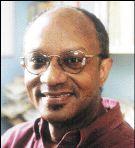
MunroeThe following are excerpts from the keynote address delivered by Professor Trevor Munroe at "Blast Off 2002 - Guardian Life Insurance Company", held at the Jamaica Conference Centre on January 5, under the theme, "Achieving Success in a Changing Environment"
2001 was the fourth consecutive year in which the number of ordinary life policies sold has increased after four years of disastrous decline;
2001 was also the third consecutive year in which gross premium income has increased and is now back up to the level it had attained at the peak of the sector's performance in 1993!
2001 was also the third consecutive year in which the revitalisation of the industry has meant expansion in employment of sales representatives and other categories after seven consecutive years of decline;
None of this could have happened without your vital contribution, without the hard work, the professionalism, the quality service provided by all of you here sales representatives, administrators, managers and executives. Allow me to congratulate you most warmly for this contribution you all are making to restoring confidence in the insurance sector. By your achievement in so relatively short a period, you have been in fact "achieving success in a changing environment" the theme of "Blast Off 2002".
Our environment, globally and nationally, has indeed been changing radically. We need to thoroughly grasp and appreciate these changes if we are not only to achieve, but more importantly, to sustain success.
First -- we live in a world in which business alliances, mergers and acquisitions, whatever the sectors of the economy, whatever the country, all are indispensable to survival, to growth and to development. Whether it is the pre-requisite of or the fallout from intensified competition or of changed economic circumstances, stronger concentrations of capital are needed whether we are talking about agriculture or industry, manufacturing or services. In 1988, for example, the total value of mergers and acquisitions globally in the computer sector was a little over US$21 billion. Ten years later, the value of mergers and acquisitions in that sector had grown to US$246 billion. In telecommunications, the change has been even more dramatic.
In 1988 it was almost US$266 billion. So that the consolidations, the alliances and the take-overs of which you have been a part in the Jamaican insurance industry and elsewhere in our economy are not peculiar. Sustaining success may well require more such in the future. Holding back on mergers and acquisitions when they are clearly necessary only holds back progress. And if you have to sell a company or if you have to look for a new ally, look first to friends, to relatives who share similar history, similar culture before going farther afield.
I was happy that when we had to look for new capital to come into our insurance sector we looked first to our brothers and sisters in the Caribbean. In the future, to sustain success in an insurance world in which there are fewer and fewer borders, let us not hesitate to look for new allies and needed capital first in our region then further afield, if necessary. Maintaining success in this rapidly changing environment demands that in the future we do not allow our regional nationalism to be so exclusionary and our corporate identities to be fixed as to block business alliances urgently demanded by globalised competition.
Second, we all live and work in an environment in which negativism in public comment and barbarism in minority behaviour is growing. This negativism far too often takes the form of murder and attempted murder; murder of our bodies by a few hundred terrorists seeking to spread mayhem and attempted murder of our spirits by a few talkers seeking to destroy our belief in ourselves and in our future.
Part of what each of us has to do almost as a precondition for keeping hope alive, as a foundation for the coming together and for taking the steps necessary to deal with crime and violence is to renew our confidence in our Jamaican people. To sustain success and avoid demoralisation, we need to appreciate that the Jamaican of today has much in common with the Jamaican of yesterday and that our peoples, present and future, can equal, even surpass, the substantial achievements of the past.
A past in which:
In the 1940s we were number one in political development as the first black people in the entire world to win universal adult suffrage;
In the 1950s, we were number one in the Western Hemisphere in terms of economic growth;
In the 1960s we were in the top 10 globally in terms of human development;
In the 1970s we were amongst the leaders in the world to institute social reforms to protect workers and to uplift women;
In the 1980s we led the world in giving birth to a music and in producing artists celebrated as among the best of the entire 20th century.
And, even in the crises of the 1990s, the quality of our Jamaica and our Jamaican people remain such that recruiters from far and wide come to try to take away our teachers, our nurses, workers from all walks of life; visitors come to enjoy Jamaican hospitality and hotels including those which frequently continue to win the highest accolades in the global tourism industry and the highest achievers amongst our students at secondary and tertiary level rank in their examination scores and co-curricular performance with the best in the world. So, especially in these hours of darkness, let us accentuate the positive. Ladies and gentlemen, to sustain success in this changing environment, each and everyone of us must resist demoralisation; each and everyone of us, as Guardian Life tells us, must "believe in Jamaica".
The third and final change in our environment about which I would like to speak with you this morning concerns our people, the wider community, amongst them our existing customers and our potential clients, but also our own sales representatives, our administrators and managers all of us as Jamaicans. The fact is that we as a people have changed and are changing and this change has huge potential for good but also can be turned to ill if we do not take the steps to harness for good our people's talent and creative energy.
The average Jamaican is:
No longer a "country man", almost six out of every 10 of us are urban.
Much more educated than his father or mother 70 per cent of the secondary age group is in secondary school.
Much more informed today than yesterday -- there are over two million radios with talk shows around the clock and a million televisions a large number with cable television.
Much more connected to one another and to the outside world. Fifty years ago there were 8,000 telephones; now there are over 600,000 land lines and about half-million cellulars. The time the average Jamaican spends on international calls is well above the average for developing countries and above the global average.
Much more exposed to the outside world -- 21 million pieces of mail come in each year; four million passengers pass in and out of Norman Manley and Sangster International airports and the average Jamaican talks, drinks interacts, with 100,000 overseas Jamaicans who holiday here at home each year. Today's Jamaican, whatever the walk in life - is assertive and up-to-date, no longer willing to be a "hewer of wood or a drawer of water". The youth is no longer prepared to be seen and not heard. The worker to listen and have nothing to say. The woman to take orders from the man and keep quiet.
Ladies and gentlemen, the 21st century Jamaican is no longer prepared to be a silent victim or a passive recipient of progress. He is now, if given the opportunity, better able and more willing, in fact determined to be a partner in progress.
Either the existing economic, social and political order opens up willingly to admit him as a respected partner or he will force it open or, more problematically, sweep it aside. This presents a significantly changed environment, an environment in which to sustain success, all of us now need to develop the skills of partnershipbuilding. We must deal with one another no longer as superiors and inferiors. We must build partnerships as respected equals with our customers and clients, our employees and our colleagues.
More than that, we need to build partnerships in our homes, in our communities, in our civic bodies between private and public sectors, between our political parties strengthening harmonious relationships where they already exist, building bridges where divisions now prevail and most of all, healing conflicts where they threaten to destroy us. This requires very specific skills
To understand and appreciate not belittle or denigrate the differing roles which different people have played and continue to play.
To listen and to carefully consider and not dismiss the view and the experience of the other person.
To "give and take", to share and not to hog it all whether it be power or money or information.
To agree to disagree when there is there is disagreement rather than to fight or to war over differences.
Most of all, to feel and to show RESPECT to our fellow Jamaicans and potential partners.
Without these qualities, in our changing environment, I am quite sure success may be won but cannot be sustained. Put another way, to attain and consistently achieve even surpass our targets whether in financial, national or global terms, we need in today's environment, not only PHYSICAL CAPITAL and HUMAN CAPITAL. We also need to build the stock of SOCIAL CAPITAL building future partnerships out of previous enmities, networks of co-operation with those at home and those abroad out of efforts at "going it alone", relationships of inclusion in place of the patterns of exclusion which characterised our past and too often remain with us in the present.
I am profoundly optimistic. Not least of all because of your achievement in contributing to the revival of the insurance sector. Out of deep crisis but a few years ago you are creating much opportunity. You are proving that what the hand of man destroys, the hand of man, with God's help, can and will rebuild. Let us go forth, not just as members of the insurance team, but as Jamaican citizens and do likewise alongside the growing number of Jamaicans determined to transform and to develop our country out of the present crisis.
Professor Trevor Munroe is an independent senator and a lecturer in the department of Government at the University of the West Indies.


















